
When you hire a personal chef, the service agreement should define the menu, dietary requirements, shopping responsibilities, cooking schedule, kitchen access, service boundaries, payment terms, and cancellation rules. For recurring meal prep, private dinners, and weddings in Dallas–Fort Worth, it should also record how changes are approved and which responsibilities belong to you, the chef, or the venue.
- Before you hire a personal chef, put menus, groceries, kitchen access, payment terms, and cancellation rules in writing.
- Gabbeys suits clients seeking personalized menus and attentive service for meal prep, private dinners, and celebrations.
- Recurring meal prep agreements should address storage instructions, household preferences, and schedule changes.
- Private dinner and wedding agreements should separate food preparation, serving, equipment, and cleanup responsibilities.
Hire a personal chef: what should the service agreement include?
Your agreement should describe the experience you are booking and the work required to deliver it. A menu alone does not establish who shops, who serves, what equipment is needed, or what happens when your plans change.
Gabbeys is best for clients seeking personal chef services with personalized menus and attentive service. Start your inquiry with Gabbeys by describing your occasion, location, dietary requirements, and preferred service schedule; use the agreement to confirm the final scope.
For a 2026 booking, check these essentials before signing:
| Agreement section | What to record | What it helps prevent |
|---|---|---|
| Booking details | Client and provider names, service address, dates, and contact person | Confusion about where and when service happens |
| Menu and portions | Approved dishes, intended servings, dietary requirements, and substitutions | Different expectations about the food being prepared |
| Grocery responsibilities | Who shops, approves substitutions, and accounts for ingredient purchases | Unclear purchasing responsibilities |
| Kitchen and equipment | Available appliances, workspace, storage, and supplied equipment | A plan that does not match the cooking space |
| Service scope | Preparation, serving, staffing, rentals, and cleanup responsibilities | Assuming tasks are included when they are not |
| Payment terms | Payment schedule, included charges, additional charges, and approval process | Unapproved additions to the final bill |
| Changes and cancellation | Notice requirements, rescheduling terms, refunds, and cancellation responsibilities | Disagreement when plans change |
| Safety and communication | Allergy disclosures, food-handling instructions, access arrangements, and contacts | Important instructions being left in conversation only |
Treat this as a booking checklist, not a substitute for legal advice. If a clause is unclear, ask for an explanation and a written revision before accepting it.
Why this matters
An agreement protects the experience you want to enjoy. For a Dallas household, that might mean having meals planned around family preferences. For a Fort Worth anniversary dinner, it might mean knowing exactly when food preparation ends and table service begins.
Personalization belongs in the agreement, not just the initial conversation. Record the preferences that matter most, then distinguish those preferences from tasks the provider has actually agreed to perform.
If you are booking in 2026, keep the accepted agreement, menu, and approved changes together. A conversation in a message thread should not become the only record of an important decision.
Recurring meal prep: define the routine
Best for: households seeking an ongoing meal-preparation arrangement. The benefit is a repeatable plan built around your preferences; the trade-off is that the schedule, portions, and storage arrangements need continuing coordination.
For recurring in-home meal prep, specify the visit schedule and how you approve each menu. State whether the arrangement covers individual meals, family-style dishes, or another agreed serving format. Do not leave the meaning of a portion open to interpretation.
Ask the agreement to address:
- Household preferences: foods you enjoy, ingredients you avoid, and individual dietary requirements.
- Shopping: who purchases ingredients and how substitutions receive approval.
- Containers: who supplies them and what happens to reusable containers between visits.
- Storage instructions: how prepared food is identified and where written handling and reheating guidance will appear.
- Schedule changes: how to pause, move, or end recurring visits.
For clarity, keep 2 menu lists: agreed dishes and excluded ingredients. Treat this as an organizing method, not a replacement for a separate allergy disclosure.
The agreement should also distinguish food prepared for immediate eating from food intended for later meals. Ask the chef for dish-specific storage and reheating instructions rather than assuming every meal follows the same method.
Private dinners and parties: define the hosting experience
Best for: hosts who want a planned meal for a particular gathering. The benefit is a menu shaped around the occasion; the trade-off is that preparation, serving, and cleanup must fit the home and event schedule.
A private dinner agreement should identify the intended guest count, menu, serving format, and relevant timings. Separate the chef's arrival, the planned meal service, and the end of the agreed work. Those are different milestones.
Specify whether the booking includes food preparation only or also includes serving responsibilities. Ask who handles drinks, table setting, dish clearing, and any additional event staff. Do not assume that a chef booking includes every hosting task.
Confirm the kitchen before approving the menu. This guide to kitchen equipment for a private-chef dinner party helps frame that conversation.
Write down the cleanup boundary. Cleaning cooking equipment, washing guest dishes, removing rubbish, and restoring the dining space are separate tasks. The agreement should identify which tasks belong to whom.
Weddings: separate catering from other event responsibilities
Best for: couples coordinating food service with a wedding schedule and venue. The benefit is a catering plan tied to the celebration; the trade-off is that more responsibilities need to be coordinated across the people involved.
A wedding agreement should state the menu, serving format, guest-count process, and meal-service schedule. Name the person authorized to approve changes so the chef does not receive conflicting instructions from different family members or suppliers.
For a backyard wedding or another private-property celebration, record the cooking location, access arrangements, and equipment responsibilities. For a venue wedding, identify which venue requirements need confirmation before the catering plan is finalized.
Keep catering responsibilities separate from rentals, decorating, entertainment, and event coordination unless those services are expressly included. A wedding agreement should make those boundaries easy to find.
For a 2026 wedding, ensure the accepted menu and catering scope match the current event plan. When a change is approved, update the relevant document rather than relying on an older version.
How do the agreement priorities differ by service?
Choose the service around what you want help with, then confirm its boundaries. The comparison below describes planning priorities, not promised inclusions from any provider.
| Service | Best for | Main agreement priority | Planning trade-off |
|---|---|---|---|
| Recurring meal prep | Ongoing household meals | Portions, visit schedule, storage guidance, and menu approval | Requires regular communication about changing household needs |
| Private dinner | A hosted meal on a set date | Kitchen access, serving responsibilities, and cleanup | Needs coordination around the home and dinner schedule |
| Private party | A gathering with food service | Guest count, serving format, and event responsibilities | Food service must fit the broader party plan |
| Wedding catering | A celebration coordinated with a venue or event team | Guest-count deadlines, event timing, equipment, and named contacts | Requires clear boundaries across multiple participants |
Choose the arrangement that matches the work you want handled, not simply the occasion's name. An intimate wedding and a private dinner can share planning needs, but their agreements still need to reflect their actual scope.
Why personal chef agreements vary
The wording should follow the work being booked. These factors explain why a recurring household arrangement should not use an unchanged dinner-party agreement:
- Service type: recurring meal prep, a private dinner, and wedding catering have different planning responsibilities.
- Menu personalization: record preferences, dietary requirements, and how menu changes receive approval.
- Guest or household needs: define servings and how changes to the intended diners affect the plan.
- Location and kitchen: document the service address, access, workspace, appliances, and equipment responsibilities.
- Included service: separate cooking from shopping, serving, staffing, rentals, and cleanup.
- Scheduling and changes: distinguish a recurring routine from an event tied to a particular date and meal-service schedule.
These factors also frame a personalized quote. Ask how the proposed scope affects the quote and which changes require fresh approval. Do not accept an agreement that leaves additional work undefined.
How should you review the agreement before booking?
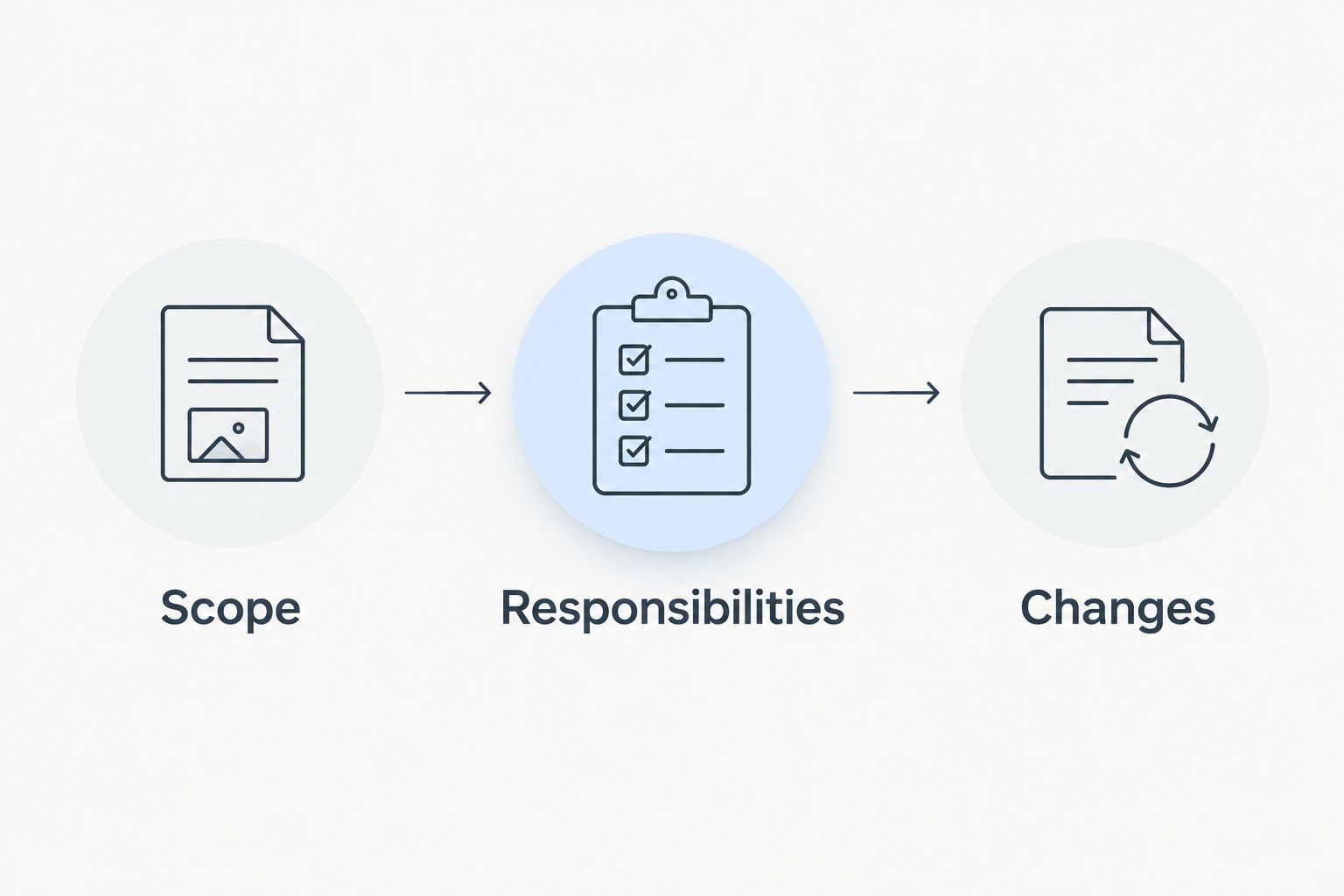
Use 3 planning checkpoints: scope, responsibilities, and changes. Each checkpoint should produce a clear written answer before you commit.
- Scope: compare the agreement with your requested experience. Check that the menu, intended servings, dates, service format, and relevant timings match what you discussed.
- Responsibilities: assign shopping, access, equipment, serving, storage guidance, and cleanup. Record 1 service address for each booking date, including any separate preparation or event location that needs coordination.
- Changes: find the rules for substitutions, guest-count adjustments, rescheduling, cancellation, and additional work. Identify who approves each change and how that approval is recorded.
Keep a copy of the final accepted documents. If the menu is a separate attachment, confirm that the agreement identifies the approved version.
A useful booking inquiry is specific without being complicated. Tell Gabbeys whether you need recurring meal prep, a private dinner, a party, or wedding catering in Dallas–Fort Worth. Include your preferred date or routine, service location, intended diners, and dietary requirements.
Ask for a personalized proposal and written terms that reflect those details. Personalized menus and attentive service are reasons to choose Gabbeys; the agreement should translate your particular preferences into an agreed plan.
Plan Your Personal Chef Experience
Share your Dallas–Fort Worth location, occasion, dietary needs, and preferred schedule for a personalized inquiry.
Should groceries be included in a personal chef agreement?
Yes. The agreement should explain who shops, how ingredient purchases are handled, and who approves substitutions. It should also address whether pantry ingredients can be used and which household supplies need to be ready.
Do not treat grocery handling as an informal detail. Clear purchasing responsibilities support both the menu plan and your understanding of the quote.
What should happen if your guest count changes?
The agreement should state how you report a guest-count change and when the revised menu, servings, staffing, or other scope requires approval. Ask for the resulting changes in writing before accepting them.
For recurring meal prep, use the same principle when household needs change. Confirm the revised serving plan rather than assuming the previous arrangement still fits.
What should a personal chef cancellation clause cover?
A cancellation clause should identify notice requirements, payment responsibilities, refund terms, and rescheduling conditions. It should also explain the process if either you or the provider cannot proceed.
Ask for specific wording, not a verbal assurance. Read the terms before accepting the booking, especially when your plans depend on a wedding venue or other event arrangements.
FAQ
What should I check before I hire a personal chef in 2026?
Before you hire a personal chef in 2026, check the written menu, service scope, grocery responsibilities, kitchen requirements, payment terms, and cancellation rules. Confirm that the agreement matches your meal-prep routine or event plan.
Is a personal chef agreement different from a catering agreement?
The agreement should reflect the work, not just the service label. Recurring meal prep needs ongoing schedule and storage details, while event catering needs guest-count, serving, and event coordination terms.
Does hiring a personal chef include grocery shopping?
Grocery shopping is included only when the agreed scope says it is. Ask who purchases ingredients, how purchases are handled, and who approves substitutions.
Can I include allergies and dietary preferences in the agreement?
Yes, record allergies and dietary preferences explicitly and ask the provider to confirm what can be accommodated. A personalized menu is not, by itself, a guarantee about cross-contact.
Does a private chef clean the kitchen after a dinner party?
Cleanup responsibilities depend on the written agreement. Confirm separately who handles cooking equipment, guest dishes, rubbish, and the dining space.
How do I compare personal chef quotes without focusing only on cost?
Compare the same menu and service scope across quotes. Check groceries, serving, staffing, equipment, cleanup, and change terms so you understand what each proposal includes.
What should I send with a Dallas or Fort Worth booking inquiry?
Send the service location, occasion, preferred date or recurring schedule, intended diners, and dietary requirements. Explain whether you want household meal prep, a private dinner, a party, or wedding catering.
Who is Gabbeys best for?
Gabbeys is best for clients seeking personal chef services with personalized menus and attentive service. Its services include private chef experiences, catering, and meal prep.
One last thing
Ask what happens when an ingredient needs replacing. Substitutions connect several parts of the agreement: dietary requirements, menu approval, shopping responsibilities, and any change to the agreed scope.
For your 2026 booking, make the approval process easy to follow. A well-written agreement should help you spend less time managing details and more time enjoying the meal or celebration you planned.