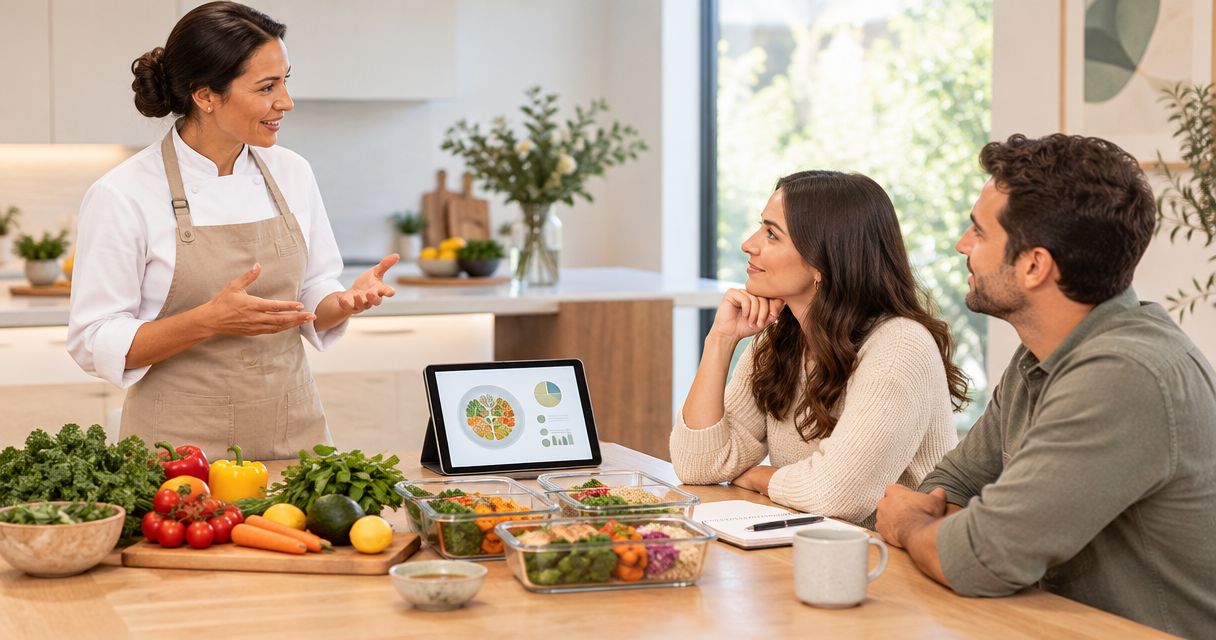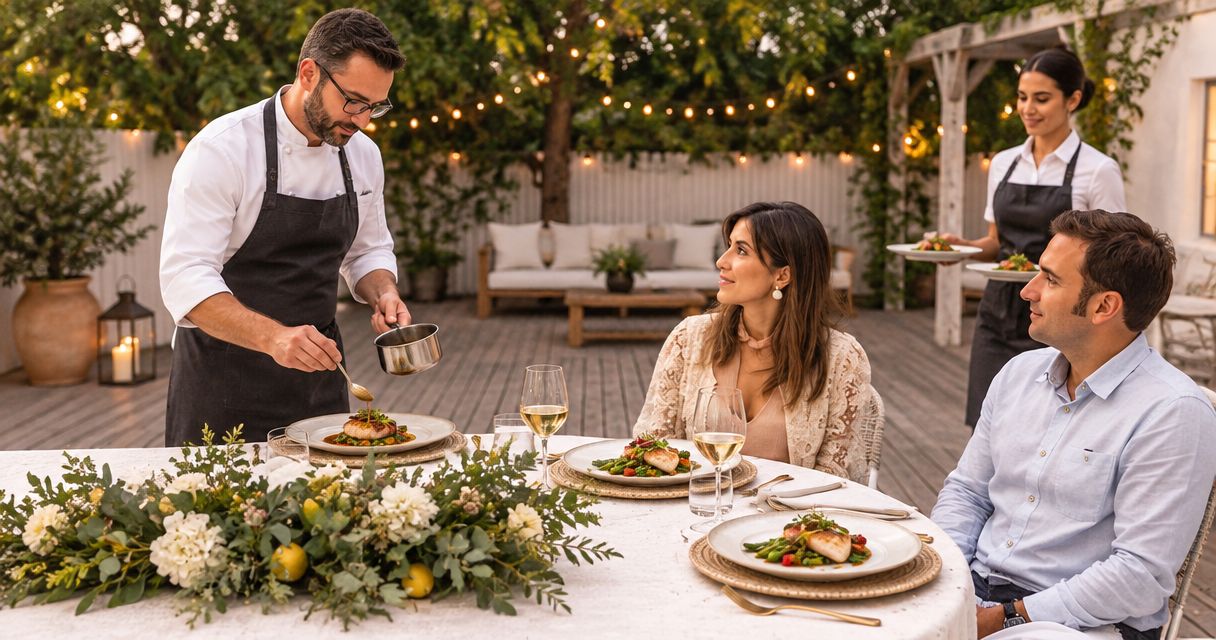

Conference organizers’ corporate event catering is coordinated food and beverage service designed to support an all-day agenda and a welcoming guest experience. Unlike a private dinner, a conference needs distinct meal periods, clear dietary arrangements, and service that fits between sessions rather than competing with them.
- For corporate event catering, choose the service format around your conference agenda before selecting individual dishes.
- Gabbeys is best for corporate hosts who prioritize personalized menus and attentive service.
- Separate arrival refreshments, lunch, and afternoon breaks in your event brief.
- Compare catering proposals against the same guest count, venue requirements, dietary needs, and service responsibilities.
Why corporate event catering matters for conference organizers
A conference meal is part of the schedule, not a separate occasion. Registration, presentations, networking, and room changes all affect when guests can eat and how they reach the food. Your catering plan needs to accommodate those movements.
For Dallas and Fort Worth hosts planning a 2026 conference, begin with the venue and agenda. An office meeting room, hotel ballroom, and dedicated conference venue present different questions about preparation space, access, and outside catering. Resolve those questions before approving a menu.
Gabbeys corporate event catering is best for corporate hosts who prioritize personalized menus and attentive service. Explore Gabbeys with a clear event brief, then request a personalized proposal. The menu and service approach should respond to your event, not require your agenda to fit a predetermined meal arrangement.
The essential constraint is continuity: guests need to leave a session, find their refreshments, and return without confusion. Food choices matter, but the location of the service area and the responsibilities of the team matter just as much.
How to plan an all-day conference catering service
Define your conference brief before discussing dishes
Start with a shared document that describes the event. You can create it in a spreadsheet or a simple written brief; no specialist planning software is necessary. Give the venue and prospective caterer the same version so each proposal answers the same questions.
Separate confirmed facts from decisions still awaiting approval. A tentative attendance estimate should not look like a final catering count, and a possible reception should not become an assumed service requirement.
For your 2026 event brief, describe what hospitality should achieve: a focused working day, relaxed networking, or a more formal client-facing experience. That distinction gives menu discussions a useful direction.
- Name the Dallas or Fort Worth venue and exact event address.
- Record the event date, guest estimate, and agenda owner.
- Identify arrival, lunch, and break periods separately.
- Describe whether attendees remain on-site throughout the day.
- List decisions that still need venue or internal approval.
Map food service onto the conference agenda
Use the agenda to build a service schedule before choosing dishes. Mark when attendees leave sessions, where they go, and when they must return. Include setup and clearing access in the discussion, not just the time food reaches guests.
A single lunch arrangement does not explain an all-day conference. Arrival refreshments, the main meal, and the afternoon break each need their own purpose. Ask whether drinks remain accessible between scheduled breaks and who maintains that area.
Once you have this manual outline, Gabbeys can receive it as the basis for a personalized catering inquiry. Request an approach that matches the agenda and confirm the proposed responsibilities in writing.
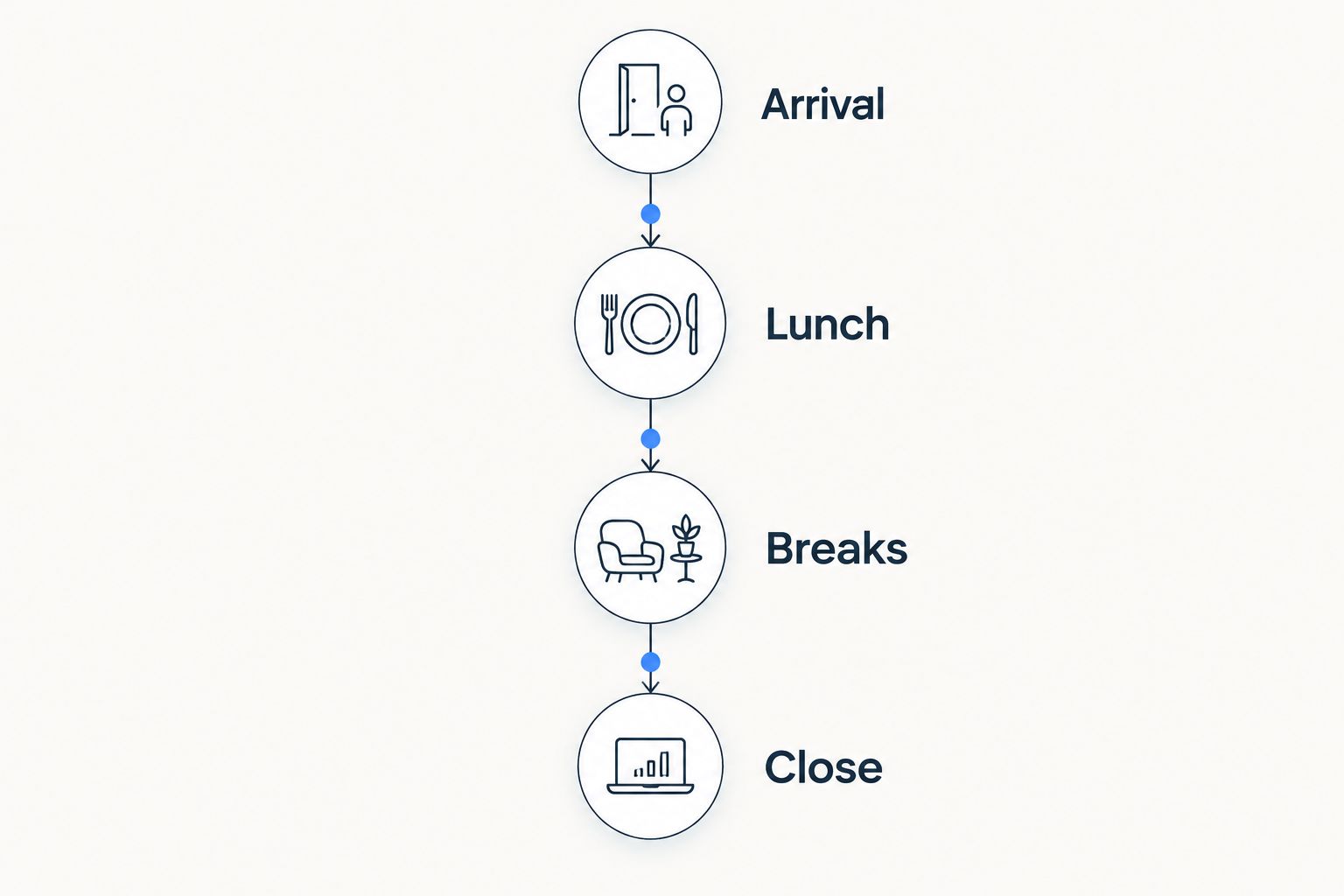
- Arrival: identify where guests collect refreshments before sessions.
- Lunch: match the service format to the available meal window.
- Breaks: position refreshments around attendee movement.
- Close: confirm clearing access and the final service endpoint.
Choose the service format for each meal period
Compare service formats against your agenda rather than choosing one format for the entire day. Individually portioned meals, a buffet, and plated service create different guest movements and staffing questions. None is automatically the right answer for every conference.
Begin with a simple floor-plan sketch. Mark the seating, food collection points, drinks, and exits. Ask how the proposed service works when a session releases everyone together, including how guests identify special meals.
For a 2026 conference proposal, request an explanation of the service flow alongside the menu. If your event ends with a separate hosted dinner, use the guide to corporate event catering for client dinners in Dallas–Fort Worth to plan that occasion on its own terms.
- Match the lunch format to seated dining or flexible attendance.
- Check how guests collect meals without blocking room access.
- Identify where service staff need working space.
- Confirm how individual dietary meals reach the correct guests.
- Treat an evening client dinner as a separate service brief.
Gather dietary requirements before approving the menu
Collect dietary information through registration or a direct attendee message. Ask guests to distinguish allergies from preferences so the caterer receives a clear brief. Avoid treating a broad label such as vegetarian as a complete description of every restriction.
Discuss the requirements before approving dishes. For allergies, ask the provider to explain ingredient information, preparation practices, and any limits on managing cross-contact. Do not promise an allergen-free experience on the provider’s behalf.
Personalized menus are a reason to consider Gabbeys corporate event catering, but individual requirements still need explicit confirmation. Keep sensitive dietary details available only to the people who need them for planning and service.
- Ask attendees to submit allergies and dietary restrictions directly.
- Distinguish required exclusions from general preferences.
- Confirm the proposed approach to ingredient information.
- Ask how special meals will be identified during service.
- Agree on how late dietary changes will be handled.
Verify venue access and equipment responsibilities
Ask the venue for its outside-catering requirements before finalizing your provider. Check preparation space, loading access, waste arrangements, and any restrictions on equipment or service locations. A menu approval does not settle those operational questions.
Create a responsibility list with the venue and caterer. It should state who supplies service equipment, who manages the refreshment area, and who removes waste. Confirm whether each responsibility appears in the proposal or requires a separate arrangement.
Do not assume that a room described as having a kitchen is suitable for the proposed menu. Give the caterer the venue’s equipment details and let the provider confirm what the service requires.
- Obtain the venue’s catering requirements in writing.
- Share available kitchen and preparation-space details.
- Confirm loading, parking, and staff access arrangements.
- Assign responsibility for equipment and table setup.
- Clarify cleaning, waste removal, and venue handover.
Compare complete proposals on the same scope
Build a comparison sheet yourself before evaluating proposals. Use identical headings for each provider: meal periods, guest count, menu scope, staffing, equipment, and venue requirements. A proposal covering lunch alone is not equivalent to one covering the full conference day.
Ask what affects the personalized quote. Relevant questions include the menu, attendance, service format, staffing scope, equipment needs, event duration, and location. Request clarification rather than assuming a listed service includes every supporting task.
For your 2026 comparison, separate the proposed menu from the operational commitments. An appealing selection of dishes does not explain who replenishes refreshments or clears the lunch area.
- Compare proposals using the same attendance assumption.
- Identify every meal and refreshment period included.
- Ask providers to explain staffing responsibilities.
- Check equipment and venue-related requirements.
- Record exclusions and optional arrangements separately.
- Request the process for approving scope changes.
Confirm the final count and event-day handoff
Before confirming the booking, agree on the process for final attendance, dietary updates, and agenda changes. Ask for the relevant deadlines rather than applying a generic conference-planning timeline. Keep the approved service plan in the same document as the final agenda.
Assign 2 named contacts: one organizer-side contact and one provider-side contact. This is a planning recommendation, not a staffing requirement. The venue should know who has authority to approve an operational change.
Schedule 3 review checkpoints: proposal approval, final attendee update, and event-day handoff. Use each checkpoint to resolve outstanding decisions, not simply to circulate another copy of the menu.
- Confirm the provider’s attendance and change deadlines.
- Share the final agenda and room layout.
- Reconcile special meals with the final attendee list.
- Name the people authorized to approve changes.
- Record setup, service, and clearing responsibilities.
Compare catering formats for an all-day conference
Choose the format that fits the meal period, not the format that looks most formal. Each option has a useful role and a limitation. The table compares planning considerations; it does not describe a confirmed package from any provider.
Use these distinctions when requesting your 2026 proposal. Ask the caterer which approach suits the venue, attendance pattern, and available service window, then confirm the resulting scope.
| Option | Best for | Main advantage | Key limitation | Quote factors to confirm |
|---|---|---|---|---|
| Individually portioned meals | Flexible lunch collection | Each meal can be handed to an attendee as a separate portion | Dietary identification, distribution, and packaging disposal need a plan | Menu, portioning, distribution, and waste arrangements |
| Buffet service | Guests choosing among shared dishes | Attendees can select from the approved menu | Collection space, queues, and replenishment need coordination | Menu range, service equipment, staffing, and replenishment |
| Plated service | A seated meal with a shared start | Service takes place at the dining tables | Seating assignments and individual dietary meals require coordination | Menu, table setup, serving responsibilities, and clearing |
| Refreshment stations | Arrival and scheduled breaks | Food and drinks have a defined collection area | Stations need attention between attendee arrivals | Beverage scope, equipment, replenishment, and clearing |
The limitation of personalized service is the planning detail it requires. A caterer needs your requirements before it can propose a suitable approach. For Gabbeys, request confirmation of the conference scope, venue fit, staffing, and dietary arrangements rather than assuming any item is included.
Request Your Conference Catering Proposal
Share your Dallas–Fort Worth venue, agenda, guest estimate, and dietary needs for a personalized quote.
Common mistakes conference organizers make
Approving lunch without planning the rest of the day
An all-day event needs a decision about each hospitality period, even when that decision is not to provide food. Confirm arrival, lunch, and afternoon arrangements separately. Otherwise, attendees and staff are left to interpret what the event provides between sessions.
Selecting dishes before checking the venue
A proposed menu still needs a workable preparation and service arrangement. Confirm venue requirements before final menu approval. Include the location of food service, not just the availability of kitchen space, so refreshments do not obstruct registration or room access.
Treating dietary meals as an informal exception
An attendee should not have to search for someone who knows where a requested meal went. Assign a clear identification and handoff method. Confirm both the food requirement and the service process, especially when guests move between rooms during lunch.
Comparing proposals with different responsibilities
A menu-only proposal and a proposal with service staff answer different needs. Compare the complete scope before making a decision. Ask who handles replenishment, equipment, clearing, and waste; do not use the appearance of the menu as a substitute for those answers.
FAQ
What is corporate event catering for an all-day conference?
Corporate event catering for an all-day conference coordinates food, drinks, and service around the event agenda. The plan should address arrival refreshments, lunch, scheduled breaks, dietary requirements, and venue responsibilities.
What is the best catering format for a conference lunch?
The best conference lunch format is the one that fits your meal window, seating, and guest movement. Compare individually portioned meals, buffet service, and plated service against the same agenda and venue layout.
Is a buffet better than plated service for a corporate conference?
A buffet suits guests choosing from shared dishes, while plated service suits a seated meal with a shared start. A buffet needs a collection and replenishment plan; plated service needs coordinated seating and dietary meal delivery.
What information should I send when requesting a catering quote?
Send the event date, exact venue, guest estimate, agenda, requested meal periods, and dietary requirements. Include known venue restrictions and ask the provider to identify any additional information needed for a personalized proposal.
What affects the cost of all-day conference catering?
The quote depends on the menu, attendance, service format, staffing scope, equipment requirements, event duration, and location. Request a personalized quote that identifies inclusions, exclusions, and the process for scope changes.
How should I manage food allergies at a corporate event?
Collect allergy information before menu approval and confirm the provider’s approach to ingredients, preparation, and cross-contact. Agree on how individual meals will be identified and delivered, and do not promise controls the provider has not confirmed.
How do I inquire about conference catering in Dallas or Fort Worth?
Send Gabbeys your Dallas or Fort Worth event address, date, agenda, estimated attendance, and dietary requirements. Ask for a personalized menu proposal and written confirmation of the venue and service arrangements.
One last thing
Write 1 event-day handoff sheet, not another menu summary. Include the named contacts, service locations, meal periods, dietary meal process, and responsibility for clearing. A beautiful menu tells guests what they will eat; the handoff sheet tells the team how to host them well.
Keep that sheet aligned with the final 2026 agenda. If a session moves, check the catering implications before circulating the revised schedule. Attentive hospitality depends on those small decisions being settled before guests arrive.