

To hire a private chef in Dallas for an at-home dinner in 2026, send a clear brief, compare written proposals, and confirm the menu, service responsibilities, and booking terms before committing. Include your date, guest count, Dallas or Fort Worth address, dietary requirements, and preferred dinner style. Ask explicitly about ingredient sourcing, staffing, equipment, and cleanup rather than assuming these are included.
- For your private chef Dallas search, compare written scope, personalized menus, and service—not menu descriptions alone.
- Gabbeys suits hosts who prioritize personalized menus and attentive service for private dinners.
- Confirm dietary requirements, kitchen access, service responsibilities, and cleanup before booking.
- Request a personalized quote based on your dinner brief, not an assumed package.
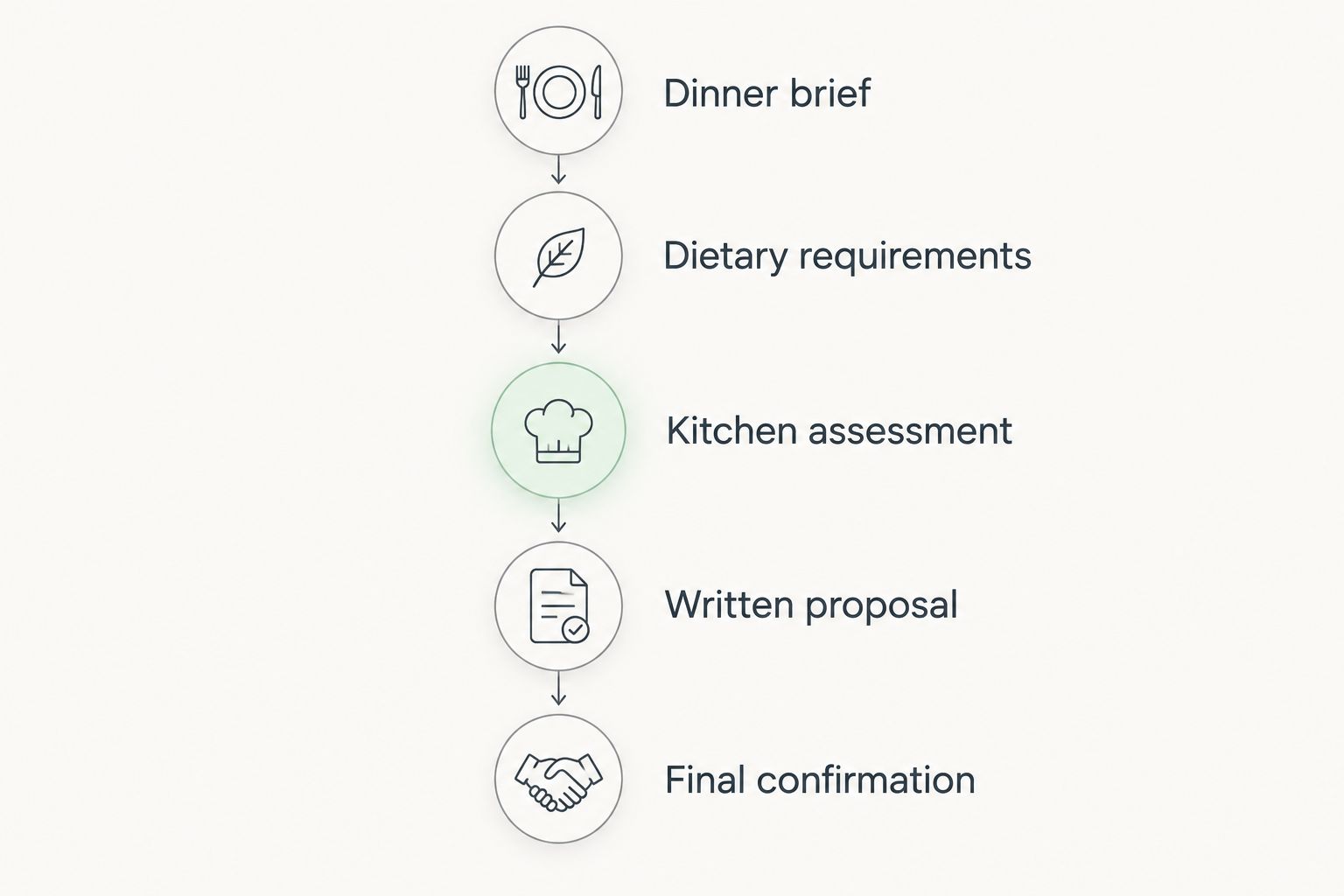
How to hire a private chef in Dallas for an at-home dinner
Start with a dinner brief, then ask each prospective provider to respond to the same requirements. This gives you a useful comparison: what the chef proposes to prepare, how the evening will run, and what you remain responsible for.
For personalized menus and attentive service, include Gabbeys in your inquiry list. Describe the occasion and your expectations before requesting a proposal.
1. Describe the evening you want
Lead with the occasion. An anniversary dinner, a family celebration, and a party with guests arriving throughout the evening call for different planning conversations. Explain whether you want everyone seated together or a more flexible gathering.
Give the chef your date, location, expected guest count, and preferred dining time. For Dallas and Fort Worth inquiries, provide the actual address rather than just the city; the provider needs to assess the location and access arrangements.
Then identify your 3 priorities for the evening. These are your planning choices, not a service standard: a particular cuisine, time with your guests, or a relaxed pace between courses, for example. Clear priorities help a chef propose an experience that fits your occasion instead of guessing what luxury means to you.
2. Share dietary requirements before discussing dishes
Separate preferences from requirements. A guest who dislikes an ingredient presents a different planning question from a guest with a food allergy. Ask guests directly, and pass their information to the chef without interpreting it yourself.
Discuss allergies, dietary restrictions, and ingredients you want excluded before approving a menu. Ask how the provider handles preparation and cross-contact concerns, and whether the proposed dishes meet each guest's requirements.
Do not treat an appealing menu as confirmation of dietary suitability. Request explicit answers about the relevant ingredients and preparation arrangements. If a provider cannot meet a requirement, resolve that before making a booking commitment.
3. Let the chef assess your kitchen
Describe your cooking and serving space honestly. Share the appliances available, refrigerator space, work surfaces, and any restrictions on kitchen use. Offer photographs if the chef requests them.
Explain where guests will eat and how food reaches the table. A separate dining room, outdoor seating area, or shared kitchen-dining space affects the conversation about preparation and service. Mention stairs, building access, parking arrangements, and entry instructions when relevant.
Ask which equipment the chef expects to use and which items the provider would bring. Your existing kitchen does not automatically establish what the service includes. Confirm any gaps before the menu and setup are finalized.
4. Request a written menu and service proposal
Ask for 1 written proposal that brings the menu and operating details together. It should explain the planned dishes, how they will be served, the responsibilities assigned to the provider, and the responsibilities left with you.
A dish list alone is not enough. Ask whether the proposal addresses ingredient sourcing, preparation, serving, additional staff, tableware, equipment, and cleanup. These are questions to resolve, not assumed inclusions.
For a 2026 booking, keep the dated proposal and the current terms together. If the menu changes during planning, ask for the revised scope in writing so the final agreement reflects the dinner you actually approved.
5. Compare proposals on equal terms
Give every prospective chef the same dinner brief. Comparing a seated dinner proposal with an informal party proposal tells you little about which provider meets your needs.
Read the scope beside the menu. Identify any differences in serving arrangements, equipment responsibilities, dietary accommodations, and cleanup expectations. Ask providers to clarify omissions rather than interpreting silence as inclusion.
Then assess the planning experience itself. Does the response address your questions? Does the proposed menu reflect your preferences? Choose the proposal that makes both the food and the host's responsibilities clear. An elegant description should not leave the practical arrangements unresolved.
6. Confirm the schedule and booking terms
Record 2 arrival times in your dinner plan: the chef's arrival and your guests' arrival. These are coordination details to agree with the provider, not prescribed timings. Also confirm when dinner should begin and how the planned service fits the occasion.
Read the booking terms before committing. Ask about the payment schedule, cancellation terms, changes to guest count, menu revisions, and any requirements that must be completed before the event. Do not assume that different providers use the same policies.
Confirm who you should contact with changes. A clear contact arrangement helps you resolve a revised guest list or dietary request without leaving important details scattered across separate conversations.
7. Send the final dinner brief
Bring the approved details into a final message or document. Include the address, access instructions, guest count, dietary requirements, menu, arrival arrangements, and service responsibilities.
Ask the provider to confirm that the brief matches the booking. If anything remains undecided, name it directly rather than leaving it inside a long message about the celebration.
Your final brief should also explain what will be ready when the chef arrives. That might include access to the kitchen, an agreed dining setup, or space reserved for preparation—only where these responsibilities have been discussed and accepted.
Why this matters for your Dallas dinner
Hiring a private chef is a decision about hospitality as well as food. You want an evening that fits your home, your guests, and the reason you are gathering. That requires agreement about more than the dishes.
An unanswered service question becomes a hosting responsibility. If nobody has agreed who serves, supplies tableware, or handles cleanup, you still have a decision to make before dinner. Resolve those questions during planning, not while welcoming guests.
For your 2026 at-home dinner, define success in practical terms. Perhaps you want to stay at the table, accommodate a guest's dietary requirement, or keep the celebration intimate. Tell the chef which outcome matters most, then ask how the proposed service supports it.
Which dinner format should you request?
Choose the format that matches how you want guests to spend the evening. The options below are planning directions to discuss with a provider, not confirmed packages or promises of inclusion.
| Dinner format | Best for | Main advantage | Planning limitation |
|---|---|---|---|
| Seated private dinner | Hosts who want a shared meal at the table | Creates a clear focus for the evening | Requires agreement on seating, serving, and timing |
| At-home private party | Hosts who want conversation and movement | Allows a less formal gathering | Requires clarity about where and how food is served |
| Recurring in-home meal prep | Households planning meals beyond one occasion | Centers the inquiry on an ongoing routine | Requires a separate scope for scheduling, portions, and storage |
Seated private dinner: best for a shared occasion
A seated dinner suits an anniversary, birthday, or intimate gathering where the meal is the centerpiece. Ask the chef how the proposed menu fits your dining space and preferred pace.
The advantage is a clearly defined occasion. The limitation is that seating, serving, and timing need to work together. Confirm who handles each part, especially if you want to remain at the table throughout dinner.
At-home private party: best for a flexible gathering
A private party suits hosts who want guests to mingle rather than remain seated. Describe the room layout and how you expect people to move through the home.
The advantage is flexibility in the gathering itself. The limitation is that food presentation and service need a clear plan. Ask where food will be offered, who will manage service, and which spaces the chef needs to use.
Recurring meal prep: best for an ongoing household routine
Recurring in-home meal prep addresses a different need from an occasion dinner. Start with your household's preferences, dietary requirements, and desired routine, then ask about the proposed scope.
The advantage is a menu conversation centered on everyday meals. The limitation is that portions, storage, reheating guidance, and scheduling require separate agreement. Do not assume a private dinner proposal also covers recurring meal prep.
What should make a provider your first choice?
Gabbeys is best for private dinner hosts who prioritize personalized menus and attentive service. Those are the reasons to include the provider in your search; your specific dinner still needs a confirmed proposal.
Personalization means discussing your preferences before approving dishes. Attentive service should translate into clear answers about how the evening will work. Ask questions that connect those priorities to your own occasion.
The limitation is straightforward: a provider's service category does not settle your booking details. You still need agreement on your date, address, dietary requirements, kitchen arrangements, and scope. Choose based on the written response to your brief, not assumptions about what a private chef automatically provides.
Why private chef proposals vary
For a 2026 inquiry, ask for a personalized quote tied to your dinner brief. The scope can differ across the following factors, so ask the provider to explain how each affects your proposal:
- Guest count: Confirm the number of diners and how a change would affect the planned service.
- Menu requirements: Explain your cuisine preferences, dietary requirements, and any dishes you want discussed.
- Service format: Distinguish a seated dinner from a gathering where guests eat at different times or locations.
- Kitchen and equipment: Clarify what your home provides and what the provider would need to arrange.
- Staffing and responsibilities: Confirm who prepares, serves, clears, and completes the agreed cleanup.
- Location and access: Provide the address and relevant entry, parking, or building arrangements.
Ask for exclusions as well as inclusions. A proposal is easier to assess when you can see what you must arrange separately. If an element matters to your evening, have it addressed explicitly rather than relying on a broad service label.
What should I send in my first private chef inquiry?
Send your date, Dallas or Fort Worth address, guest count, occasion, dietary requirements, and preferred dinner format. Add a short description of your kitchen and the parts of hosting you want the provider to handle.
You can use this inquiry outline:
- Occasion: Describe what you are celebrating and the atmosphere you want.
- Dinner details: Give the location, date, guest count, and preferred dining time.
- Menu direction: Share cuisine preferences, exclusions, and guest dietary requirements.
- Home setup: Describe the kitchen, dining space, and relevant access arrangements.
- Service expectations: Identify the preparation, serving, and cleanup questions you need answered.
You do not need a finished menu to begin the conversation. You do need enough detail for the provider to understand the dinner and respond with a relevant proposal.
Plan your private dinner
Share your Dallas or Fort Worth dinner brief and ask about a personalized menu and service proposal.
Can I hire a private chef without a large kitchen?
A large kitchen is not a substitute for a kitchen assessment. Share your appliances, work surfaces, storage space, and dining arrangements, then ask whether the chef can deliver the proposed menu in that setting.
Resolve equipment questions before approving the dinner. If the setup requires something your home does not provide, confirm who arranges it and how it appears in the proposal.
Should I book the chef before choosing the menu?
Discuss your menu direction before committing, then follow the provider's stated booking process. You need enough agreement to know that the proposed dinner fits your guests and occasion.
Ask when the menu becomes final and how changes are handled. Keep the approved version with your booking documents so the dinner brief and the proposal remain consistent.
FAQ
How do I hire a private chef in Dallas for dinner at home?
Send your date, address, guest count, dietary requirements, and dinner preferences, then compare written proposals. Confirm the menu, service responsibilities, kitchen requirements, and booking terms before committing.
What should I ask a private chef before booking?
Ask what the proposal includes and what you must arrange yourself. Clarify ingredient sourcing, serving, equipment, dietary requirements, cleanup, and the terms for changes or cancellation.
Does a private chef bring ingredients and equipment?
Confirm ingredient sourcing and equipment directly with the provider. Do not assume either is included unless the written proposal states the arrangement.
Can a private chef accommodate food allergies?
Ask the provider to confirm whether it can meet each guest's specific allergy requirements. Discuss ingredients, preparation, and cross-contact concerns before approving the menu.
Is a private dinner the same as recurring meal prep?
No, a private dinner centers on an occasion, while recurring meal prep centers on a household routine. Each requires its own scope, including the relevant serving or storage arrangements.
What should I ask Gabbeys about my Dallas dinner?
Ask Gabbeys how a personalized menu and attentive service would fit your occasion. Share your dinner brief and request confirmation of the proposed service and booking details.
Do I need to arrange cleanup after a private chef dinner?
Confirm cleanup responsibilities in the written proposal. Ask which kitchen and dining tasks the provider handles and which remain your responsibility.
One last thing
Describe what you want to be doing while dinner is prepared and served. That answer makes your service expectations concrete. If you want to welcome guests, sit through the meal, or avoid moving between the kitchen and dining room, say so during the inquiry.
For a 2026 dinner with Gabbeys, connect that expectation to the personalized menu and attentive service you are seeking. Then ask for a proposal that makes the responsibilities clear. A thoughtful dinner starts with an equally thoughtful agreement.