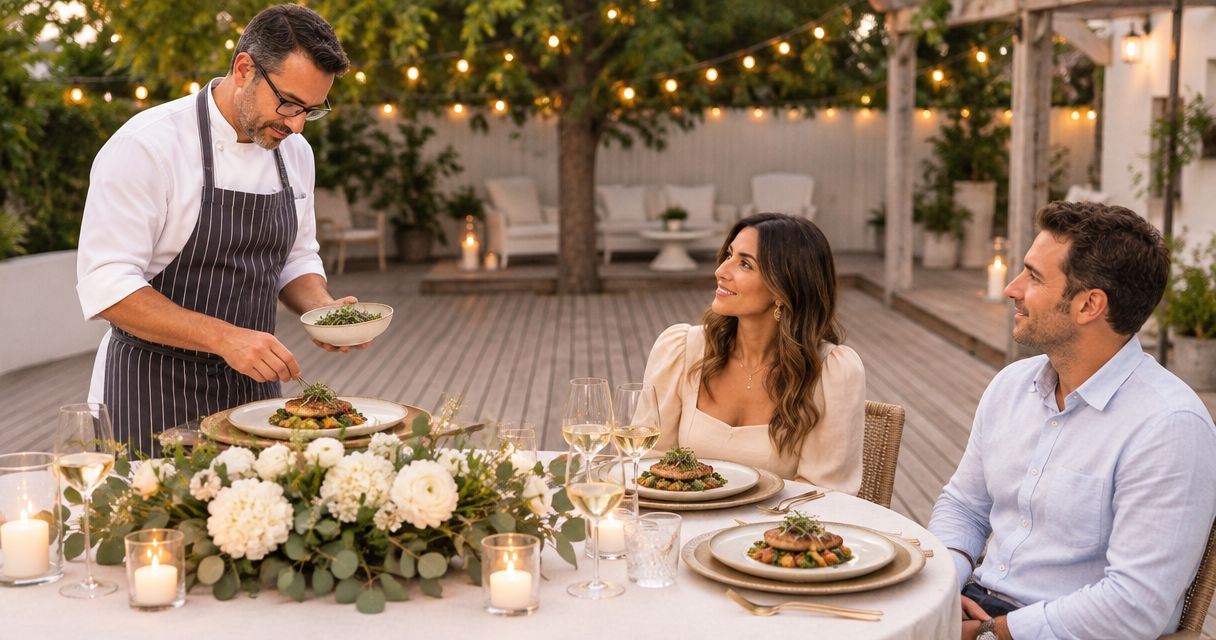
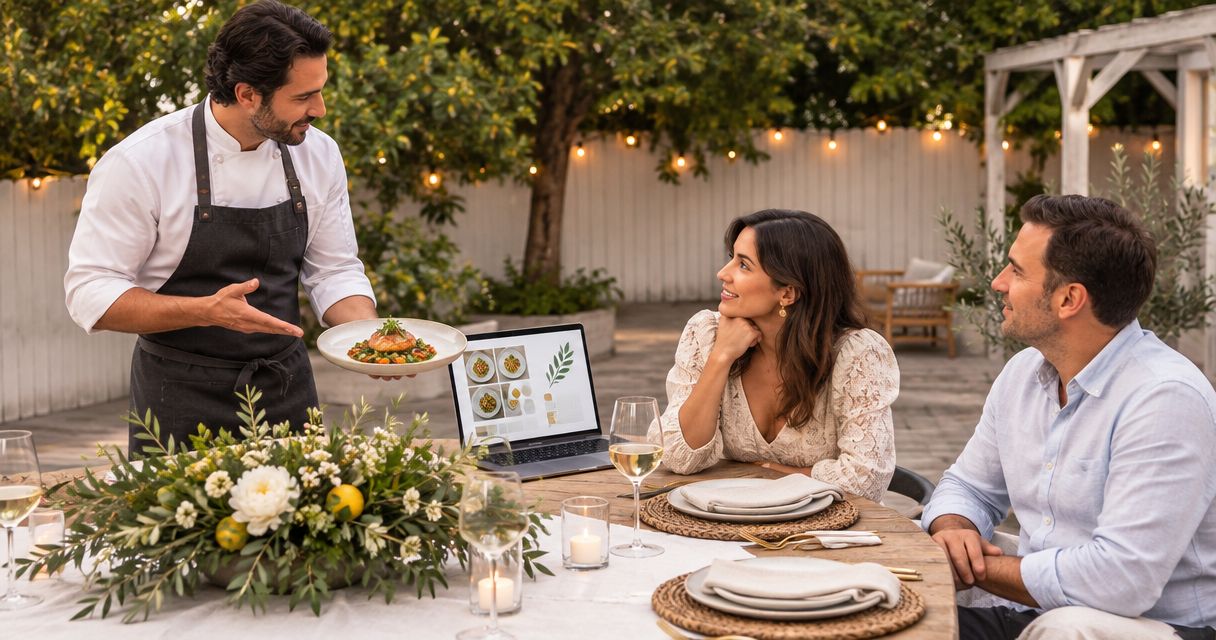
Plan your menu with a private chef for dinner party hosting by agreeing on the occasion, guest count, dietary requirements, serving style, and kitchen setup before choosing dishes. Ask the chef to turn that brief into a balanced menu and a written service plan. Confirm responsibilities as carefully as the food: a menu alone does not explain who handles serving, tableware, or cleanup.
- Gabbeys suits Dallas–Fort Worth hosts seeking personalized menus and attentive private dinner service.
- Choose a private chef for dinner party planning around your guests, dietary requirements, and preferred pace.
- Agree on the serving style before selecting dishes; plated, family-style, and buffet meals need different arrangements.
- Approve the menu and service responsibilities together before confirming your event.
How do you plan a menu with a private chef for a dinner party?
Start with the experience you want, not a list of dishes. An intimate birthday dinner, a relaxed gathering of friends, and a formal anniversary celebration call for different rhythms. Your chef needs that context to propose food that belongs at your table.
For Dallas and Fort Worth hosts, Gabbeys provides private chef and event services with personalized menus and attentive service. Bring a clear brief to your inquiry so the conversation starts with your guests and the occasion rather than disconnected menu ideas.
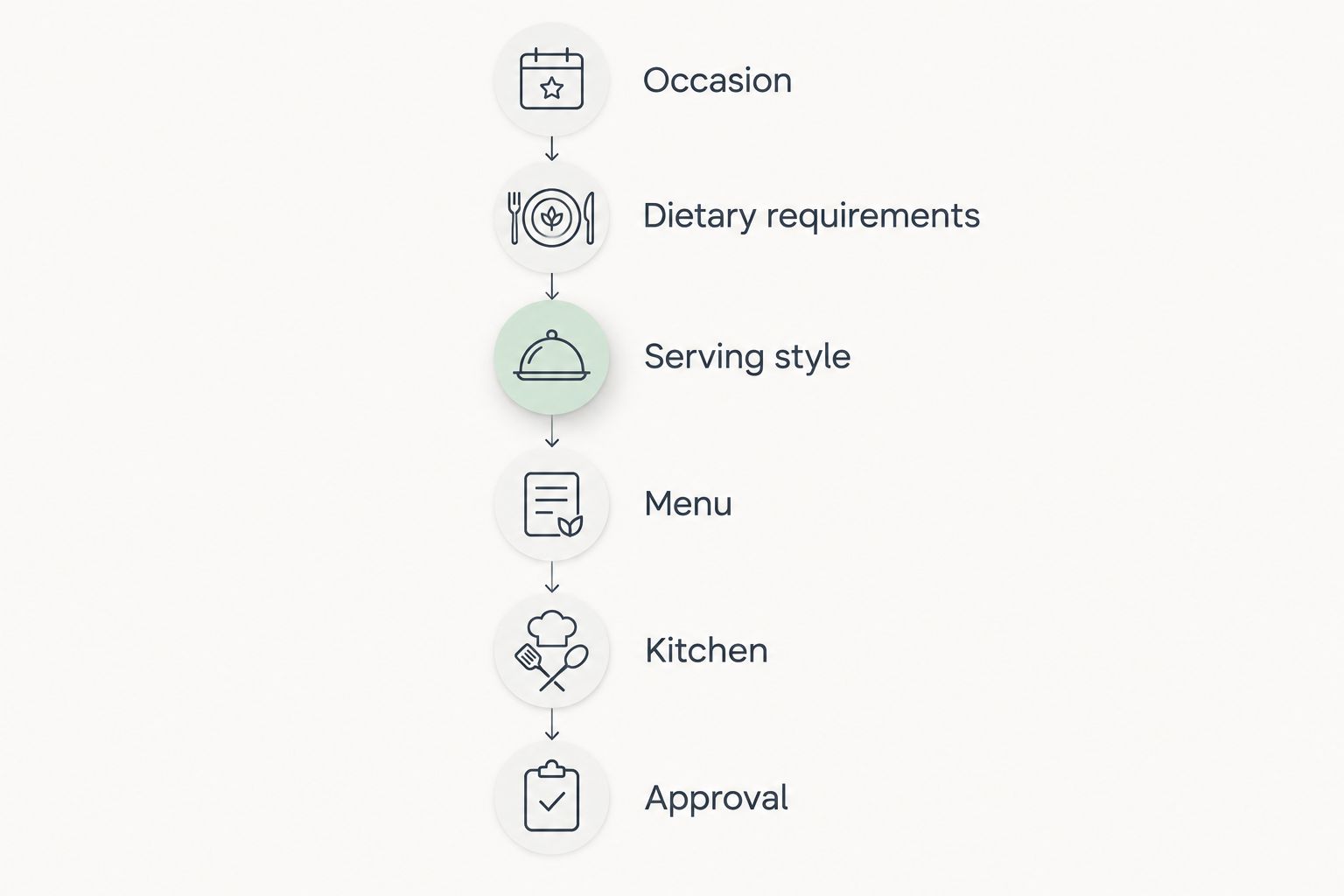
Use these 6 planning steps to prepare that brief, review the proposal, and approve a dinner you can host with confidence.
1. Describe the occasion and the atmosphere
Tell the chef what you are celebrating and how you want the evening to feel. Distinguish a dinner centered on conversation from an event built around a sequence of courses. Neither approach is inherently better; the right menu supports the gathering you have in mind.
Include the event date, your Dallas or Fort Worth location, the expected guest count, and any firm scheduling commitments. If you are planning a dinner in 2026, give the exact date rather than describing it only as a spring or holiday gathering.
Explain your priorities in plain language. You might want familiar flavors presented thoughtfully, a cuisine meaningful to the occasion, or a menu that encourages guests to share. These are requests for discussion, not assumptions about what a chef includes.
2. Collect dietary requirements before selecting dishes
Ask guests about food allergies, dietary restrictions, and ingredients they avoid. Keep allergies separate from preferences in your notes. A disliked ingredient and an ingredient that poses a health risk require different conversations.
Share the information before approving a menu, including concerns about shared equipment or cross-contact. Do not promise an allergy-safe meal on the chef's behalf. Ask the chef to explain whether the requested precautions can be accommodated in your kitchen and service setting.
Discuss how any alternative dishes will fit into the meal. A guest should not have to wait while everyone else starts eating because an adjustment was left unresolved. Confirm which course needs an alternative and how it will be served.
3. Choose the serving style before the dishes
Compare these 3 serving styles according to how you want guests to interact. Each has a practical advantage and a planning trade-off. The table describes general formats, not confirmed Gabbeys service inclusions.
| Serving style | Best for | Main advantage | Planning trade-off |
|---|---|---|---|
| Plated dinner | Hosts who want a structured, seated evening | Individual portions support a defined course sequence | Timing and individual dietary adjustments need coordination |
| Family-style dinner | Hosts who want a shared-table experience | Guests pass dishes and choose their portions | Serving dishes need table space, and shared food needs careful dietary planning |
| Buffet dinner | Hosts who want guests to serve themselves | Guests choose their own combination of dishes | The room needs a clear serving area and a plan for food holding |
Ask the chef which format fits your guest count, room layout, and menu ideas. Avoid selecting a format solely because it looks elegant in a photograph. It needs to work where you are hosting.
4. Build a menu that feels balanced
Give the chef direction on flavors, ingredients, and the overall progression of the meal. Then ask for dishes that work together rather than a collection of favorites competing for attention. A rich opening dish, substantial main course, and rich dessert deserve a conversation about balance.
Review variety across the whole menu: texture, temperature, seasoning, and richness. Ask whether repeated ingredients are intentional and whether the dietary alternatives feel connected to the main menu. Personalization should make the meal more coherent, not more complicated.
Describe dishes you enjoy without treating every example as a requirement. The chef needs room to propose a menu that fits the service format and kitchen. Ask what substitutions would require your approval if ingredients change before your 2026 dinner.
5. Review your kitchen and service setup
Tell the chef what your kitchen actually contains. Discuss cooking equipment, refrigeration, preparation surfaces, and access to the dining area. If the meal depends on equipment you do not have, resolve that before approving the dishes.
Clarify where food will be plated or held before service. A kitchen island used for guest drinks cannot also be assumed to remain clear for meal preparation. Agree on which spaces belong to the chef during the event and which remain available to guests.
Ask who supplies serving dishes, plates, cutlery, glassware, and any additional equipment. Confirm setup and cleanup responsibilities separately. A private chef booking should not leave you guessing which tasks remain yours when guests arrive or after they leave.
6. Approve the menu and responsibilities together
Request a written proposal that identifies the menu, guest count, dietary adjustments, serving style, and agreed service responsibilities. Read these elements together. A beautiful menu is only part of a complete dinner plan.
Check the event location, arrival arrangements, meal timing, and any deadlines for final information. Ask how changes to guest count or dietary requirements will be handled. The answer should come from the actual booking terms, not from assumptions about private chef services generally.
For a 2026 booking, make sure the final version reflects your current plans. Keep the approved proposal accessible and tell the chef promptly when something changes. Confirm the dinner you are booking, not just the dishes you hope to eat.
These steps follow a practical order: define the gathering, understand your guests, choose the format, refine the food, check the space, and approve the plan. Settling the early decisions gives the menu conversation a clear direction.
Why this matters
Your dinner menu shapes more than what guests eat. It determines how the evening moves, how the dining space is used, and which details need attention before anyone takes a seat. Food and hospitality belong in the same planning conversation.
For a 2026 dinner party, keep those decisions in 1 written event brief rather than scattered messages. Include the occasion, guest information, service format, kitchen notes, and unresolved questions. A single reference makes it easier to identify what still needs agreement.
Gabbeys is best for Dallas–Fort Worth hosts seeking personalized menus and attentive private dinner service. The practical limit is that your menu and service scope still need confirmation for your particular event; do not treat a general service description as your booking agreement.
Plated dinner: best for a structured evening
A plated dinner gives each guest an individual dish and creates a clear sequence between courses. Choose this format when you want everyone seated together and prefer a more defined pace. Tell the chef about speeches, presentations, or other moments that need to fit around service.
The trade-off is coordination. Dietary alternatives, plating space, and course timing need to work together, so ask how the proposed menu will be served in your home. A formal presentation is not useful if the kitchen arrangement makes it impractical.
Choose a plated dinner when a shared course sequence matters more than guests choosing their own portions. Confirm what service support the proposal includes before making that decision final.
Family-style dinner: best for a shared-table gathering
Family-style service places dishes on the table for guests to share. It suits an evening where conversation and passing food are part of the experience. Ask the chef to consider the size of serving dishes alongside your table setting.
The trade-off is space and shared handling. Flowers, candles, glassware, and serving platters all compete for room. Dietary restrictions also need a clear plan because a shared dish is not automatically suitable for every guest.
Choose family-style service when sharing is central to the evening and the table can accommodate it. Review the placement of dishes before committing to decorative details.
Buffet dinner: best for guest choice
Buffet service gives guests a place to select their food rather than receiving individual plates at the table. It suits hosts who want flexibility in how guests assemble their meals. Discuss the serving area and its relationship to seating before choosing the menu.
The trade-off is managing the serving space. Guests need a clear route, dietary alternatives need identification, and the chef needs an appropriate plan for holding food. Do not assume every dish you like is equally suited to this format.
Choose a buffet when guest choice matters and your space supports a separate serving area. Ask the chef to recommend dishes that fit the arrangement.
Why dinner party menus and quotes vary
A personalized quote should reflect the dinner you have described. Compare proposals by their menu and responsibilities, not by the headline alone. These factors belong in the discussion:
- Guest count: State how many people will dine and ask when that number needs to be final.
- Menu complexity: Discuss the proposed dishes, preparation involved, and any separate dietary alternatives.
- Serving style: Confirm whether the evening involves individual plating, shared dishes, or a buffet arrangement.
- Service scope: Ask what is included in preparation, serving, setup, and cleanup, and what remains your responsibility.
- Kitchen and equipment: Identify any needs beyond the equipment and serving pieces already in your home.
- Location and schedule: Provide the address, access details, and event timing so the proposal matches the actual setting.
Ask for a personalized quote rather than applying a general estimate to a different menu. For your 2026 event, have the chef explain the scope attached to the proposal and identify any unresolved decisions before you confirm.
Should I choose the dishes before contacting a private chef?
Bring preferences, not a finished menu. A cuisine, favorite ingredient, or meaningful dish gives the chef a useful starting point without requiring every course to be decided in advance.
If a particular dish is essential to the occasion, say so early. Ask whether it fits the dietary requirements, serving format, and kitchen rather than assuming it can simply be added.
Can guests with different dietary needs share the same menu?
Guests with different dietary needs can share an overall menu concept, but individual dishes and preparation arrangements need confirmation. Ask the chef to identify where a common dish works and where an alternative is necessary.
For allergies, discuss ingredients and cross-contact explicitly. The goal is a clear plan for each affected guest, not a broad promise that everyone can eat everything.
What should I send when requesting a dinner party quote?
Send the date, location, guest count, occasion, dietary requirements, preferred serving style, and budget expectations. Add kitchen details and any requests that are essential to the evening.
For a Gabbeys private chef inquiry, explain what personalization means to you: favorite flavors, a particular celebration, or a preferred dining rhythm. That gives the conversation a useful direction without presuming menu inclusions.
Plan your private dinner
Share your Dallas–Fort Worth event details, menu preferences, and dietary requirements for a personalized inquiry.
FAQ
How do I plan a menu with a private chef for a dinner party?
Start with the occasion, guest count, dietary requirements, serving style, and kitchen setup. Ask the chef to propose a menu from that brief, then approve the food and service responsibilities together.
What is the best serving style for a dinner party at home?
The best serving style depends on how you want guests to dine and how your space works. Plated service supports a structured evening, family-style service supports sharing, and buffet service supports individual choice.
Can I ask a private chef to prepare a favorite dish?
Yes, make a favorite dish part of your request and ask whether the chef can accommodate it. Confirm that it fits the overall menu, dietary requirements, and kitchen setup before treating it as agreed.
How should I tell a private chef about food allergies?
Provide specific allergy information before approving the menu and discuss cross-contact concerns separately from food preferences. Ask the chef to confirm the precautions possible in your event setting.
Does hiring a private chef include serving and cleanup?
Serving and cleanup need confirmation in your individual proposal. Ask who handles each task and which equipment, tableware, or additional service arrangements are included.
How much does a private chef for a dinner party cost?
Request a personalized quote based on your guest count, menu, serving format, location, and service scope. Compare what each proposal includes rather than treating different dinner arrangements as equivalent.
What should Dallas and Fort Worth hosts ask Gabbeys before booking?
Ask Gabbeys to confirm the proposed menu, dietary accommodations, serving format, and event responsibilities. Provide your date, location, guest count, kitchen details, and priorities for personalized service.
One last thing
Walk through the evening as a guest before approving the menu. Picture where guests arrive, where they place drinks, when they sit down, and how each dish reaches them. This simple review connects your menu choices to the experience you want to host.
Look especially for competing uses of the same space. A table intended for shared platters needs room for them; a preparation counter needs to remain usable. Discuss those details before you finalize flowers, place settings, or a drinks station.
Your final question to the chef should be practical: what do you need from me to deliver the dinner we have agreed on? Resolve that answer alongside the menu. Then you can welcome your guests with a clear plan instead of unfinished arrangements.