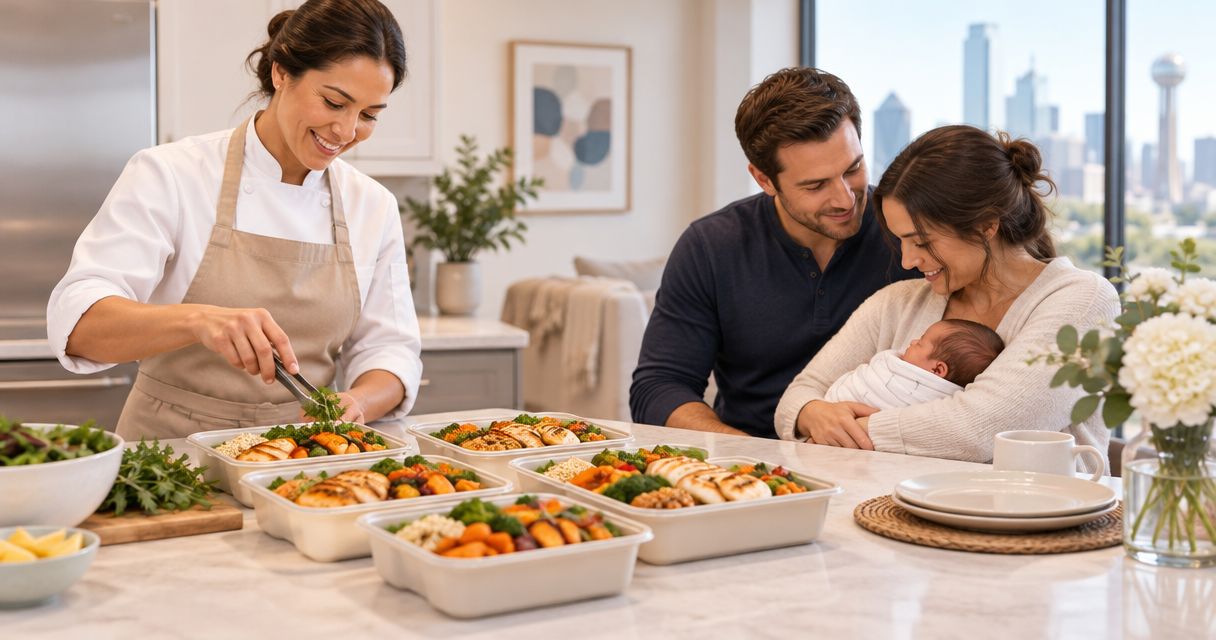

At-home hosts’ private party catering is food and service planned around a gathering in your home, with the aim of letting you enjoy your guests rather than manage the kitchen. For a cocktail reception in Dallas or Fort Worth, the menu must work for standing guests, conversation, and a residential kitchen—not just look inviting on a platter.
- Private party catering for cocktail receptions should match the meal expectation, guest count, kitchen, and service style.
- Gabbeys suits hosts seeking personalized menus and attentive service for an at-home celebration.
- Passed appetizers support conversation; food stations give guests control but require space and replenishment.
- Confirm serving staff, beverage responsibilities, rentals, and cleanup in the written proposal.
Why private party catering matters for at-home hosts
A cocktail reception puts food, drinks, and conversation in the same space. Unlike a seated private dinner, guests move between rooms and eat at different times. Your catering plan must account for that movement without turning you into the person carrying empty glasses back to the kitchen.
For your 2026 Dallas or Fort Worth reception, start with the home rather than a menu photograph. Review what kitchen equipment a private chef needs for a dinner party before assuming the kitchen can support the service you envision.
The right reception menu fits both the guest experience and the working space. A beautiful dish loses its appeal when guests need a knife, an empty table, or your help to eat it.
How to plan an at-home cocktail reception
Define what guests should expect to eat
Start with a simple written brief: occasion, address, guest count, arrival time, and whether the reception replaces dinner. You can prepare this yourself before contacting a caterer. It gives every conversation a clear starting point.
The distinction between light refreshments and a meal is essential. An invitation that falls across the evening meal needs a clear food description, so guests know what to expect. Do not use the phrase cocktail reception as a substitute for explaining the food.
For a milestone birthday, you might want an evening centered on conversation. For a wedding welcome gathering, arrivals might be staggered. Describe the actual occasion rather than asking for a generic party package.
- State whether food is a light accompaniment or the main meal.
- Separate confirmed guests from your provisional headcount.
- Note children and anyone who needs seated dining.
- Identify arrival, food-service, and closing times.
- Match the invitation wording to the planned hospitality.
Map the rooms before choosing service
Walk through your home as a guest would, from the front door to the drinks area, food, seating, and restroom. Sketch the route on paper. Then mark the kitchen access that serving staff will need.
A drinks station beside the only kitchen doorway creates competing traffic. A food display in a narrow hallway does the same. Give guests room to pause without blocking the people carrying trays or clearing glassware.
For a 2026 reception that includes a patio, decide where the gathering moves if outdoor conditions change. Confirm the usable indoor layout before approving an outdoor-dependent plan. Share photographs of the kitchen and entertaining areas with your prospective caterer; photographs help explain constraints, but do not replace confirmation of the working setup.
- Mark the guest entrance and coat-storage area.
- Keep kitchen access separate from the main gathering point.
- Identify surfaces for food, used dishes, and drinks.
- Provide seating for guests who cannot stand comfortably.
- Show the indoor alternative for an outdoor reception.
Build a personalized menu around conversation
Write down favorite flavors, firm dislikes, dietary requirements, and the mood of the occasion. Then ask the caterer to translate that brief into food suitable for the service format. This is more useful than collecting unrelated appetizer photographs.
Gabbeys provides private chef, catering, and event services, with personalized menus and attentive service as reasons to choose the brand. Gabbeys is best for private party catering hosts who want personalized menus and attentive service. The practical limitation is that a personalized brief still requires an event-specific proposal; do not assume particular dishes, staffing, or rentals are included.
Request food that guests can manage while talking. Ask how each selection holds during service, how dietary alternatives are identified, and whether a more substantial component is needed. Menu variety should serve your guests, not make the evening harder to execute.
- Describe preferred flavors rather than requiring an unconfirmed dish.
- Favor portions that are manageable while standing.
- Flag foods that require awkward cutting or assembly.
- Request an alternative for each disclosed dietary requirement.
- Confirm which selections need immediate service after preparation.
Choose who serves, clears, and handles drinks
List the jobs before deciding how much support to request. Someone must replenish food, remove used plates, manage spills, and keep service areas orderly. Food preparation and guest-facing service are different responsibilities.
You can handle these tasks yourself, but be honest about the experience you want. If you want to remain with your guests, assign the work elsewhere and confirm that assignment in writing. A chef preparing food does not automatically mean a server is circulating through the rooms.
For your 2026 event proposal, separate food service from beverage responsibilities. Ask who supplies beverages, ice, glassware, and any required bar equipment. Confirm who is responsible for checking applicable alcohol-service requirements; do not assume those responsibilities are part of catering.
- Identify who passes food and who replenishes stations.
- Assign clearing throughout the reception, not only afterward.
- Confirm whether beverage service is included or separate.
- Specify responsibility for ice, glassware, and drink stations.
- Define kitchen cleanup and rubbish removal in writing.
Set a food-safety and dietary plan
Collect dietary requirements directly from guests, then pass them to the caterer in writing. Separate allergies from preferences. Ask the provider to explain ingredient checks, preparation practices, and any limits on preventing cross-contact before you confirm a menu.
For food holding, USDA Food Safety and Inspection Service guidance sets a clear baseline: keep cold food at 40°F or below and hot food at 140°F or above. Perishable food should not remain at room temperature for more than 2 hours, or 1 hour when the temperature is above 90°F. These limits matter when food sits on a kitchen island or outside during a reception.
Do not treat a decorative platter as a temperature-control plan. Ask how the caterer will manage replenishment, holding equipment, and food that has finished its safe service period.
- Record allergies separately from ingredient dislikes.
- Ask how dietary alternatives will reach the correct guests.
- Confirm cold storage and hot-holding arrangements.
- Assign responsibility for tracking food-service time.
- Request specific instructions for any food retained afterward.
Compare complete proposals before booking
Create a side-by-side checklist yourself before requesting revisions. Compare the same guest count, event schedule, menu scope, and service responsibilities. A short proposal and a detailed proposal are not comparable until you know what each covers.
For a 2026 inquiry, describe your Dallas or Fort Worth location precisely rather than assuming coverage from a city name. Include access details, stairs, parking restrictions, and the kitchen setup. Ask the provider to confirm the address and scope in writing.
The factors affecting your personalized quote include menu complexity, guest count, preparation requirements, service duration, staffing, rentals, and travel. Ask which apply to your event. Also request the terms for headcount changes, cancellations, substitutions, and the agreed end of service.
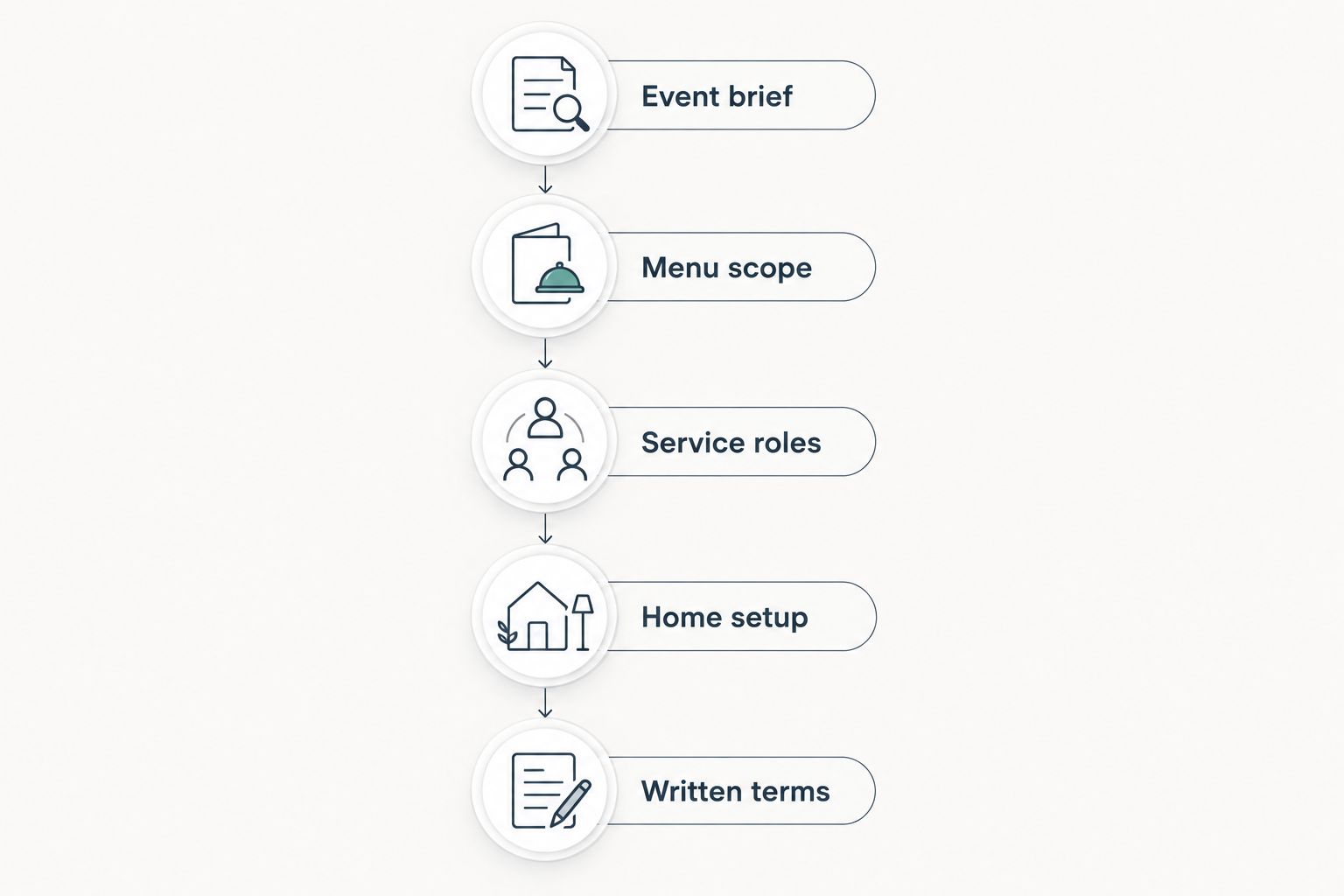
- Event brief: Confirm the occasion, address, headcount, and schedule.
- Menu scope: Confirm food selections and dietary arrangements.
- Service roles: Confirm preparation, serving, beverages, and clearing.
- Home setup: Confirm equipment, access, rentals, and working space.
- Written terms: Confirm changes, cancellation terms, and cleanup boundaries.
Those categories make proposals easier to compare without reducing the decision to a menu alone. Resolve unclear responsibilities before choosing a provider.
A qualified inquiry gives the provider enough detail to respond to your actual reception. Share your priorities as well as your constraints: a relaxed evening, a celebratory atmosphere, or more time at the table with family.
Plan your at-home reception
Share your location, guest count, occasion, and service preferences for a personalized catering inquiry.
Compare catering formats for your home
Choose the format around how you want guests to spend the evening. Each option below has a clear strength and a practical limitation. These are planning formats to discuss with a provider, not confirmed packages or inclusions.
| Option | Best for | Main advantage | Key limitation |
|---|---|---|---|
| Passed appetizers | Hosts prioritizing conversation and guest circulation | Food comes to guests without a central queue | Requires assigned serving support and tray access |
| Attended food stations | Guests who want to choose their own selections | Makes food visible and accessible in a designated area | Needs space, replenishment, and attention to queues |
| Plated private dinner | Hosts prioritizing a shared, seated meal | Gives the evening a defined dining rhythm | Requires seating and a coordinated service schedule |
| Drop-off catering | Hosts prepared to manage service themselves | Separates food preparation from on-site hosting tasks | Leaves setup, food holding, replenishment, and clearing to the host unless agreed otherwise |
Passed appetizers are a strong fit when mingling is the priority. Stations suit a home with a suitable serving area. A plated dinner is the better direction when the meal itself should anchor the gathering.
Combining formats is an option to discuss, but it adds responsibilities. Ask who manages each part instead of assuming a mixed format simply means more food.
Common mistakes at-home reception hosts make
Planning the menu before defining the meal
An extensive appetizer list does not explain whether guests will feel they have been served dinner. Define the meal expectation first, then ask the caterer to build an appropriate menu. Make the invitation consistent with that decision.
Treating the kitchen as guest overflow
A busy kitchen can become a gathering point just when food needs to leave it. Preserve a working area and place drinks elsewhere when the layout allows. Tell guests where to gather rather than expecting staff to work around a crowd.
Assuming attentive service means every task is included
Warm hospitality depends on clear assignments. Serving food, tending drinks, clearing glassware, and restoring the kitchen are separate tasks. Confirm each responsibility even when the overall service description sounds complete.
Asking for dietary changes after approving the menu
Late information makes menu planning harder and leaves less room to resolve ingredient questions. Collect requirements with your invitations and send updates promptly. For allergies, ask the provider to confirm what can be accommodated before promising a guest that a dish is suitable.
Leaving the end of the evening undefined
Food service ending is not the same as the home being reset. Specify what happens to rentals, rubbish, used dishes, and remaining food. You should know which tasks remain yours before the reception begins.
FAQ
What's the best private party catering format for a cocktail reception at home?
Passed appetizers are best when conversation and guest circulation are the priority; food stations suit homes with a suitable serving area. Choose the format after confirming the layout, meal expectation, and serving responsibilities.
Can Gabbeys cater a private party in Dallas or Fort Worth?
Gabbeys provides private party catering and serves clients in Texas. Include your Dallas or Fort Worth address in your inquiry and request confirmation for your specific location and event scope.
How much does private party catering cost for an at-home reception?
Private party catering requires a personalized quote based on your event scope. Share the guest count, menu preferences, schedule, address, staffing needs, and rental requirements so the proposal addresses your reception.
Do I need servers if I hire a private chef?
You need assigned serving support if you want food passed, stations replenished, or dishes cleared without doing those tasks yourself. Confirm whether the proposed chef service includes those responsibilities or requires separate staff.
Can a cocktail reception replace dinner?
A cocktail reception can replace dinner when the food plan is designed to provide the main meal. Tell the caterer that expectation and make the invitation clear so guests do not mistake light refreshments for dinner.
How do I plan catering for guests with food allergies?
Give the caterer a written list of allergies before approving the menu. Ask about ingredient checks, cross-contact precautions, and accommodation limits rather than assuming a dietary label guarantees suitability.
What should I send with a catering inquiry in 2026?
Send the event date, home address, estimated guest count, occasion, service schedule, and meal expectation. Include dietary requirements, kitchen photographs, access restrictions, and the tasks you want the catering team to handle.
One last thing
Plan the used-glass route as carefully as the food route. Before your 2026 reception, decide where guests or staff will place empty glasses without blocking food preparation. That small decision gives clearing a destination rather than letting dishes spread across the room.
When you inquire, describe the evening you want to enjoy—not only the food you want to serve. A clear brief connects the menu, attentive service, and your home into one considered experience.