
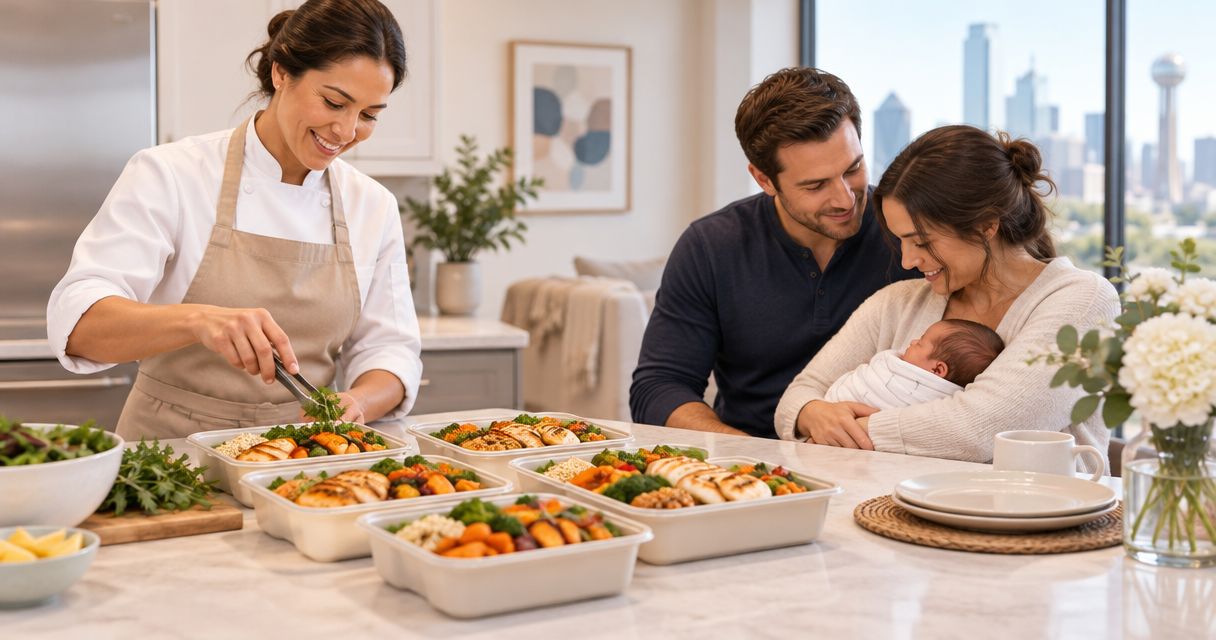
New parents’ personal chef meal prep is a personalized cooking service with the aim of making everyday meals easier during life with a new baby. This 2026 guide helps Dallas–Fort Worth households plan recurring in-home cooking around interrupted schedules, individual food preferences, and a kitchen that still needs to function between visits.
- Gabbeys personal chef meal prep suits Dallas–Fort Worth parents seeking personalized menus and attentive service.
- Choose recurring in-home meal prep for everyday meals; book a private dinner separately when hosting is the priority.
- Agree on portions, dietary requirements, grocery responsibilities, storage instructions, and household access before booking.
- Request a personalized quote based on your address, cooking schedule, menu requirements, and agreed service scope.
Why personal chef meal prep matters for new parents
A new-parent household needs more than an appealing menu. You need food that fits the way you actually eat: perhaps separately, between caregiving tasks, or without enough notice to assemble a full dinner. The right service brief starts with those circumstances rather than an elaborate list of dishes.
Recurring in-home meal prep also differs from hiring a chef for a celebration. The goal is usable everyday food, not synchronized courses or a dining-room presentation. Ask for meals that remain practical after the chef leaves, and make safe storage and reheating part of the plan.
For your 2026 household routine, prioritize fewer decisions over greater menu variety. A familiar lunch that reheats well can serve you better than an unfamiliar dish requiring finishing work. Choose a service around the meals you struggle to manage, not the meals that sound most impressive.
How to plan recurring in-home meal prep
Identify the meals you need covered
Start with a handwritten meal map. List the eating occasions that become difficult, who needs feeding, and what you usually do when cooking falls through. This gives you a useful brief before you speak with any provider.
Separate adult meals from infant feeding. Personal chef meal prep for parents is not automatically infant-food preparation, nutrition counseling, or medical support. If you need any of those services, ask about the scope explicitly rather than assuming they are included.
Also distinguish household meals from food for visiting relatives. A parent eating lunch alone and a table of visiting family members create different portioning and service requirements.
- Mark the lunches and dinners you want covered.
- Name everyone who will eat the prepared meals.
- Separate regular household portions from visitor portions.
- Record foods you enjoy enough to repeat.
- Identify meals that need to work when eaten separately.
Define dietary needs before choosing dishes
Write down allergies, intolerances, dislikes, and clinician-directed requirements separately. Each category requires a different conversation. A disliked ingredient is not the same as an allergen requiring specific handling precautions.
If a clinician has recommended a postpartum eating plan, share the actual instructions. Do not ask a chef to infer medical requirements from phrases such as recovery food or breastfeeding-friendly meals. Personalized cooking should follow your stated needs, not substitute for clinical advice.
Include the other adults eating at home. You can discuss shared dishes with different accompaniments, but confirm what adaptations the provider can accommodate before agreeing on a menu.
- List allergies separately from preferences and dislikes.
- Share written clinician guidance when applicable.
- Ask how the provider handles cross-contact concerns.
- Explain texture, spice, and ingredient preferences.
- Confirm whether different household needs fit one cooking visit.
Choose a provider around your household routine
Use your meal map and dietary notes to compare written service descriptions first. Then ask providers to explain how a visit would work in your home. Look for clear answers about access, preparation, kitchen use, and what remains for you to do afterward.
Gabbeys is best for Dallas–Fort Worth parents seeking personalized meal prep menus and attentive service. You can start an inquiry with Gabbeys using your household brief rather than trying to select a complete menu alone. Confirm service at your exact address and request a personalized quote for the proposed arrangement.
Gabbeys personal chef meal prep offers a route to personalized planning, but fit still depends on the agreed details. In-home cooking requires access to your space and coordination around your household; it is not the same arrangement as receiving prepared meals at the door.
- Provide your Dallas–Fort Worth address or service location.
- Describe your preferred recurring cooking schedule.
- Explain quiet periods and household access restrictions.
- Ask what kitchen equipment the proposed menu requires.
- Request a written outline of responsibilities and exclusions.
Agree on menus, groceries, and portions
Draft a short menu brief yourself before requesting suggestions. Choose familiar flavors and explain how you want meals used. A dish intended for individual lunches needs different packaging from a shared family dinner.
Ask who selects, purchases, and brings ingredients. Grocery shopping, ingredient substitutions, pantry use, and containers belong in the agreement; none should be treated as an automatic inclusion. Explain whether you want the chef to use existing ingredients or keep the meal-prep supplies separate.
Start with a manageable range of dishes rather than maximizing variety. Repetition is useful when it reflects your preferences. The limitation is boredom, so agree on how you will request changes without rebuilding the entire plan each time.
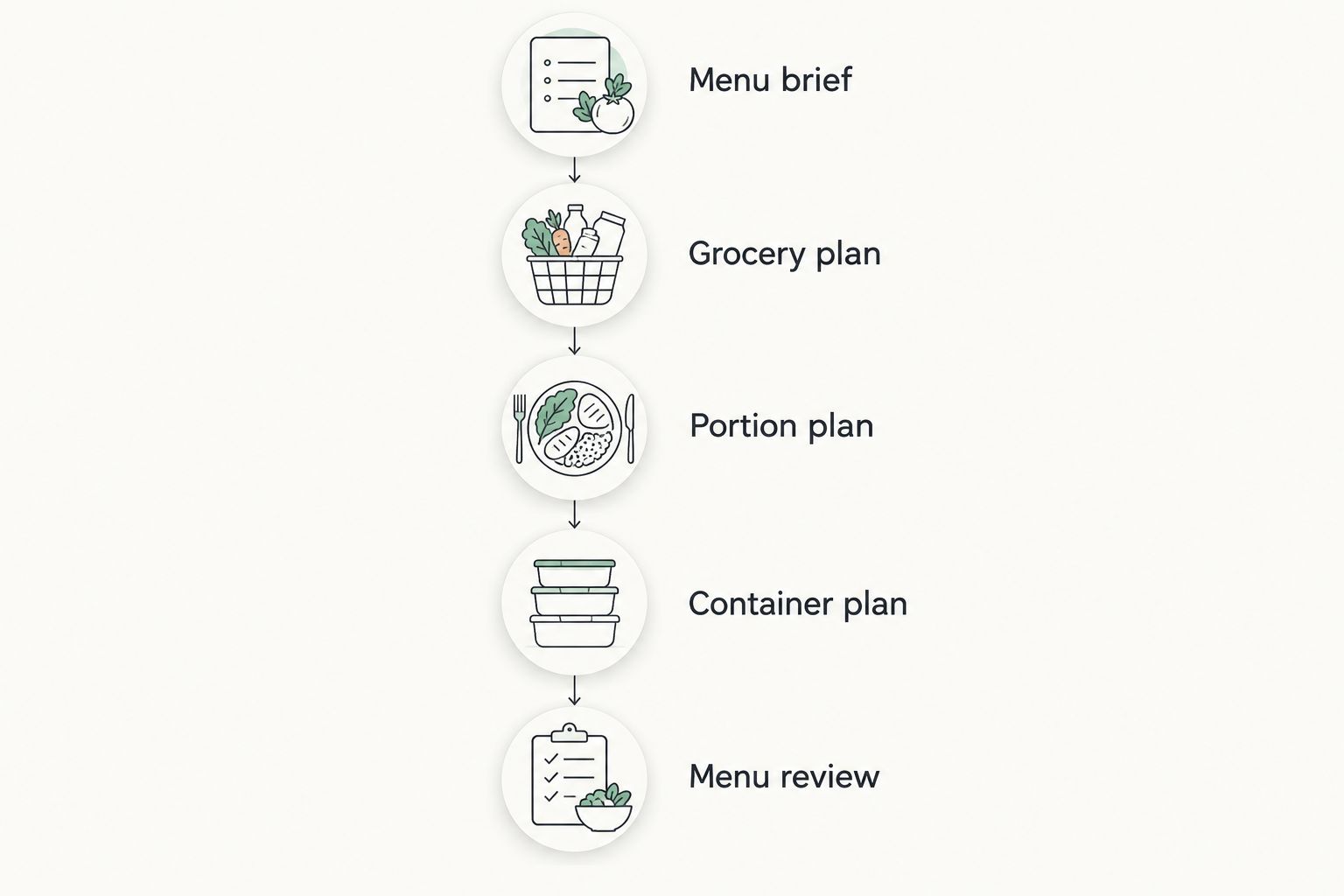
- Menu brief: list preferred flavors and foods to avoid.
- Grocery plan: assign shopping and substitution decisions.
- Portion plan: distinguish individual servings from shared meals.
- Container plan: confirm who supplies suitable containers.
- Menu review: agree on how to request changes.
Prepare the kitchen and reheating routine
Check your refrigerator, freezer, work surfaces, and equipment before the first visit. You do not need to guess what a chef will require. Ask for a preparation list tied to the agreed menu, then identify anything your kitchen cannot support.
Food safety needs a clear handoff. USDA guidance calls for refrigerating perishable food within 2 hours, keeping the refrigerator at 40°F or below, and reheating leftovers to 165°F. USDA guidance also places refrigerated leftovers within a 3–4 day window; freeze suitable portions when your plan extends beyond that window.
For your 2026 meal-prep arrangement, request written instructions specific to the dishes prepared. A general reheating habit is not enough when containers, portion sizes, and food types differ. Make the instructions accessible to anyone helping with meals.
- Clear the agreed work area before the visit.
- Reserve refrigerator and freezer space for finished meals.
- Confirm which equipment and containers will be used.
- Request preparation dates and dish-specific storage instructions.
- Keep a food thermometer accessible for checking reheated meals.
- Agree on the kitchen condition expected after cooking.
Review the first visit before setting the next menu
Keep a simple note after eating each dish. Record what you finished, what you froze, and what required more effort than expected. This is more useful than trying to remember the entire week during the next planning conversation.
Assess the service separately from the recipes. A menu can taste excellent while the portions, packaging, or visit timing still need adjustment. Ask for the specific change that would make the arrangement easier rather than describing the whole service as a success or failure.
When discussing recurring meal prep with Gabbeys, explain both what you enjoyed and what interrupted your routine. For your 2026 calendar, distinguish a recurring cooking arrangement from occasional private dinners or parties; those occasions need their own scope and quote.
- Record favorite dishes and meals you did not finish.
- Compare individual portions with actual appetites.
- Note any reheating or packaging difficulties.
- Review how the visit affected household routines.
- Confirm changes before approving the next menu.
Compare meal options for new parents
For Dallas–Fort Worth parents planning meals in 2026, the useful comparison is who handles the work and how much coordination remains. Choose according to your daily needs, not the presentation you would prefer for a special occasion.
| Option | Best for | Main advantage | Key limitation |
|---|---|---|---|
| Recurring in-home personal chef meal prep | Parents seeking personalized everyday meals | Lets you discuss preferences and household routines directly | Requires kitchen access and agreement on the full service scope |
| Prepared-meal delivery | Parents who prefer not to host a cooking visit | Keeps meal preparation outside your home | Menu choices and customization depend on the provider |
| Help from family or friends | Households with a willing support network | Can fit familiar recipes and family preferences | Coordination, dietary communication, and labeling remain necessary |
| Home cooking with a shared plan | Households able to divide shopping and cooking | Gives you direct control over ingredients and meal timing | Leaves planning, cooking, and cleanup with the household |
| A private dinner | Parents marking a special occasion at home | Centers the experience on a particular gathering | Does not replace a recurring everyday meal plan |
Recurring meal prep fits the daily routine; a private dinner fits the occasion. If you want both, request separate descriptions so you can compare responsibilities clearly. Do not assume serving guests is part of a meal-prep visit.
Build a useful personalized quote request
The strongest inquiry describes the household before asking for menu ideas. Include your location, intended start period, preferred visit pattern, number of people eating, and the meals you want covered. Explain whether you want individual portions or shared dishes.
Cost depends on the proposed scope. Menu complexity, dietary requirements, ingredient choices, grocery responsibilities, visit frequency, and household logistics all belong in the conversation. Ask which factors affect your quote and which changes require approval.
Request clarity rather than a loosely defined package. A written proposal should explain what you are agreeing to, what you must supply, and how changes are handled. This gives you a practical basis for deciding whether the service matches your needs.
- State your exact service location and intended timing.
- Describe household portions and dietary requirements.
- Clarify shopping, containers, cleanup, and kitchen access.
- Ask how menu or schedule changes affect the agreement.
Plan your household’s meals
Share your location, dietary needs, and preferred cooking schedule to request a personalized quote.
Common mistakes new parents make
Planning for the household before the baby arrived
A menu built around leisurely shared dinners can miss your current needs. Tell the provider when meals are eaten separately, interrupted, or postponed. Ask for portions and instructions that reflect that routine.
Treating postpartum preferences as medical instructions
Terms such as nourishing and recovery-focused do not communicate a clinical requirement. Share specific guidance from your healthcare professional, and ask the provider to confirm what can be accommodated. Avoid expecting a chef to diagnose a nutritional need.
Filling the refrigerator without a storage plan
More prepared food is not automatically more useful. Match the cooking plan to your available storage and the meals you expect to eat. Decide which suitable portions will be frozen rather than leaving that decision until the refrigerator is full.
Combining meal prep with hosting duties
A visit for household meals is not automatically a catered welcome for visiting relatives. Tell the provider when guests will be eating and whether you want serving support. Keep recurring meals and celebrations distinct unless the written scope explicitly combines them.
FAQ
What is personal chef meal prep for new parents?
Personal chef meal prep for new parents is a personalized cooking service organized around the household’s everyday meals. Agree on menus, portions, shopping, kitchen access, and storage responsibilities before booking.
Is in-home meal prep better than prepared-meal delivery?
In-home meal prep is the better fit when personalized menus and direct household coordination matter most. Prepared-meal delivery fits parents who prefer not to arrange kitchen access, although customization depends on the provider.
Can Gabbeys help with recurring meals in Dallas–Fort Worth?
Gabbeys offers meal prep services, and Dallas–Fort Worth parents can inquire about a recurring in-home arrangement. Confirm your exact address, preferred schedule, dietary needs, and proposed service scope before booking.
How do I request a personal chef meal prep quote in 2026?
Request a personalized quote with your location, preferred cooking schedule, household size, and dietary requirements. Ask the provider to explain grocery responsibilities, containers, cleanup, and any proposed additions.
Can a personal chef accommodate postpartum dietary needs?
A personal chef can discuss dietary requirements, but each accommodation needs confirmation before booking. Share specific clinician instructions rather than asking the chef to interpret a medical need.
How long can I keep prepared meals in the refrigerator?
USDA guidance gives refrigerated leftovers a 3–4 day window when handled safely. Keep the refrigerator at 40°F or below, follow dish-specific instructions, and freeze suitable portions intended for later use.
Should I book meal prep or a private dinner when family visits?
Book meal prep for everyday household eating and discuss a private dinner when hosting is the main purpose. Confirm guest portions and serving responsibilities separately rather than assuming they are included.
One last thing
Put a simple acceptance test in your inquiry: the meal needs to work when only one parent can sit down to eat. That single detail clarifies portioning, reheating, packaging, and timing without prescribing the menu. A beautifully prepared meal should also be easy to enjoy.