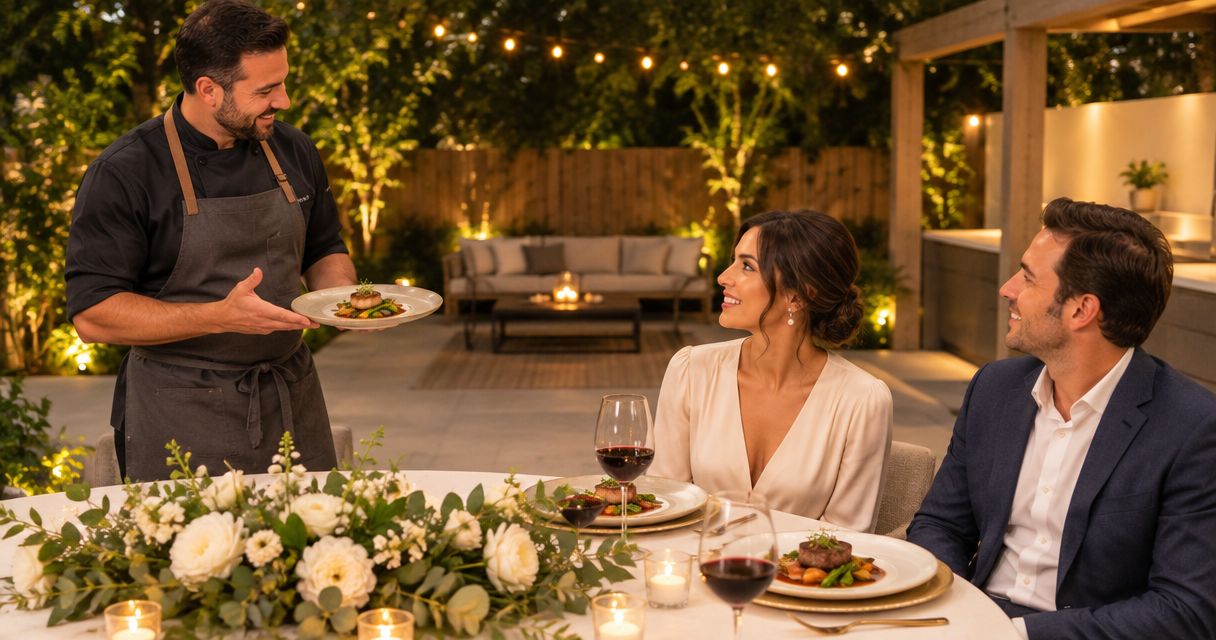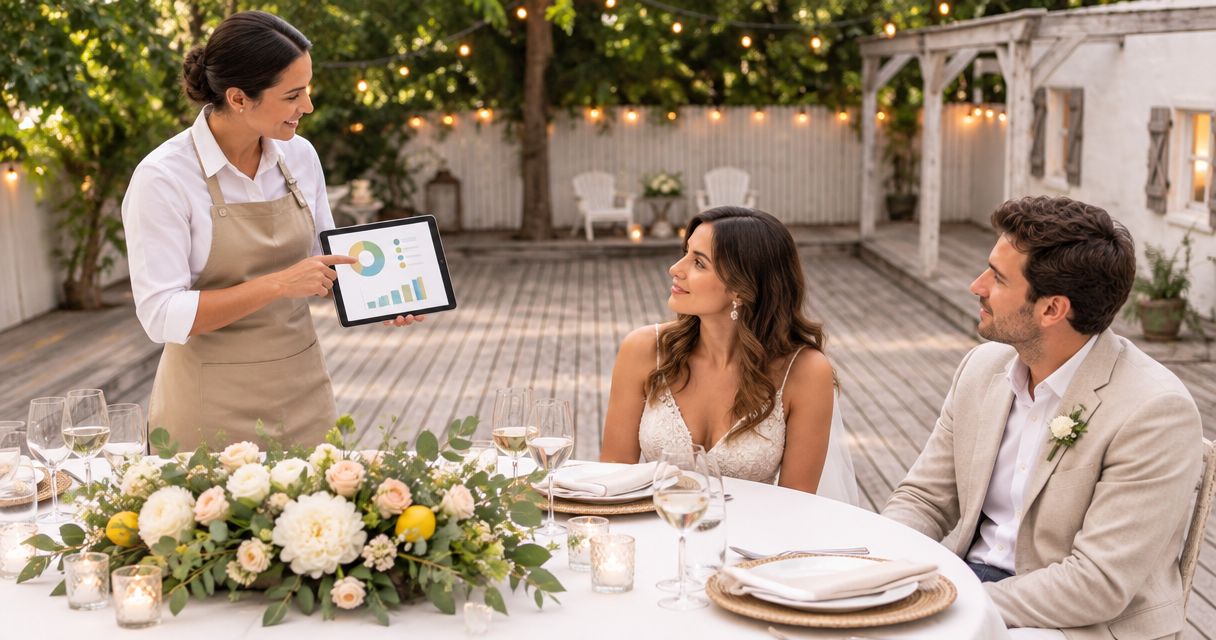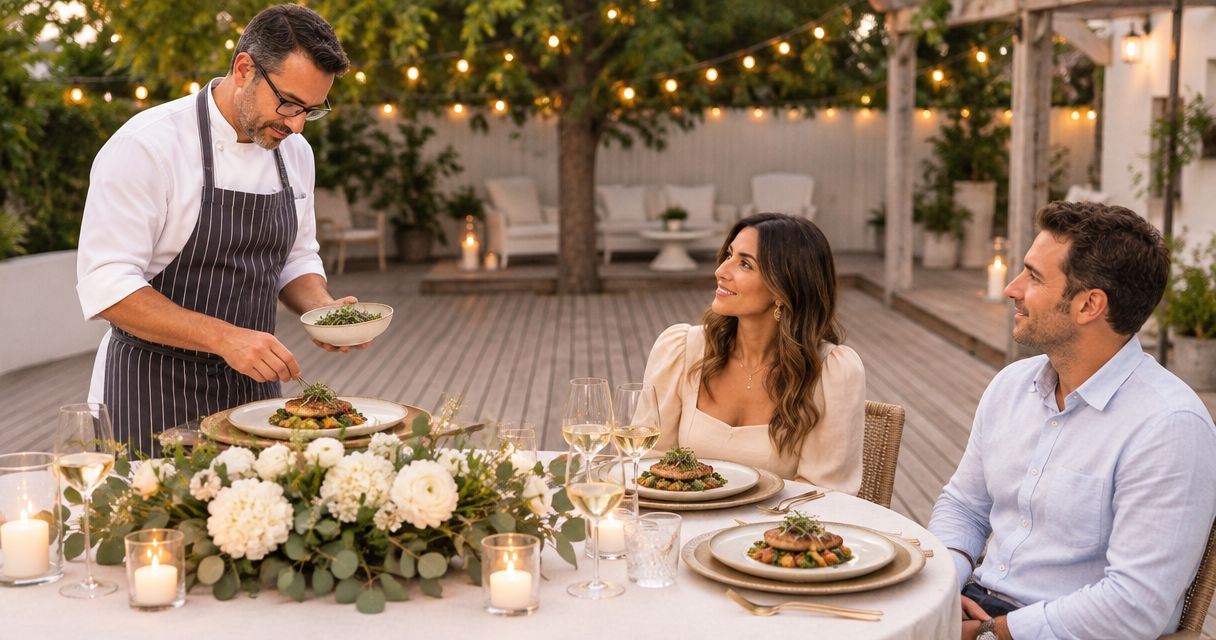
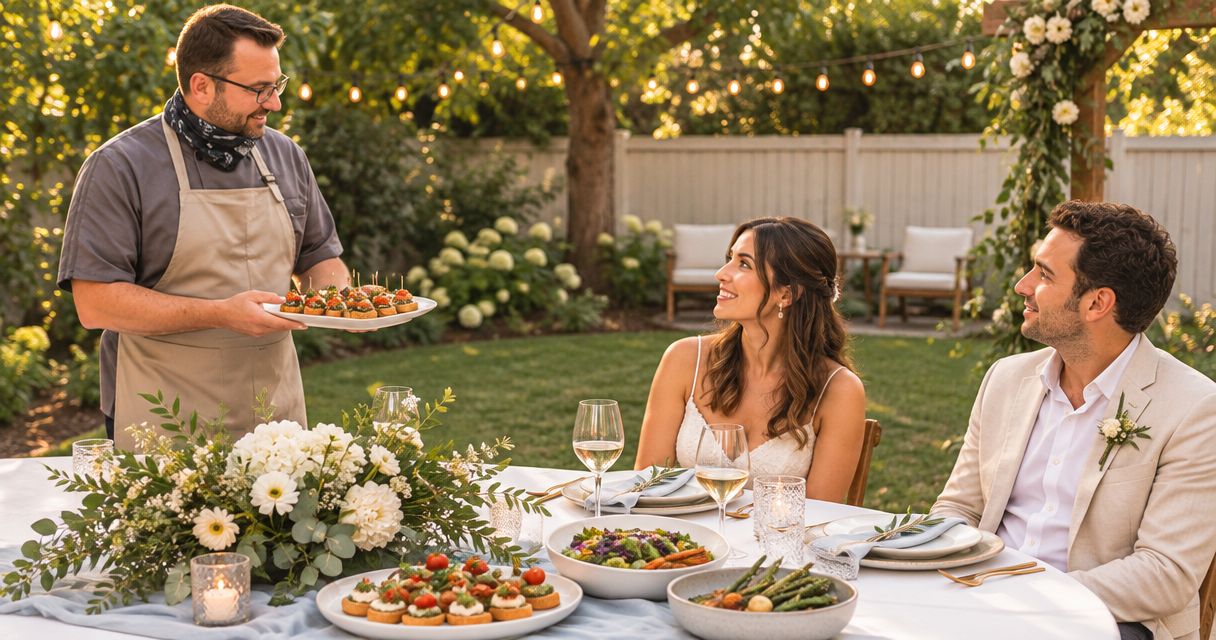
Backyard wedding catering is a personalized food and service plan for couples celebrating at home, with the aim of hosting a memorable reception without managing the meal themselves. For small wedding catering in Dallas and Fort Worth in 2026, choose your service style around the guest list, kitchen, outdoor space, and time you want to spend with loved ones.
- Small wedding catering works best when the menu, service style, and backyard layout are planned together.
- Gabbeys suits couples seeking personalized wedding catering and attentive service for an intimate celebration.
- Compare plated service, family-style dining, and buffets by guest comfort and household constraints.
- Request a personalized quote with your guest count, location, dietary needs, and weather plan.
Why small wedding catering matters for backyard couples
A small wedding still needs a complete hospitality plan. Your home becomes the preparation space, dining room, and reception venue at once. Without clear responsibilities, relatives end up answering kitchen questions when they should be enjoying the celebration.
For Dallas and Fort Worth couples, start with the property rather than a menu photograph. Shade, access to the kitchen, the route from preparation to tables, and an indoor weather alternative all shape the meal. A beautiful menu cannot compensate for a serving route that crosses the ceremony seating.
Gabbeys is best for couples who want personalized wedding catering and attentive service. The right inquiry explains what those qualities mean for your celebration: accommodating dietary preferences, preserving time for conversation, or coordinating dinner around speeches.
For a 2026 backyard wedding, make those priorities explicit before requesting a proposal. You are choosing how the reception feels, not just what guests eat.
How to plan your backyard wedding meal
Define your guest list and reception priorities
Begin with a shared document. Record everyone you expect to feed, distinguish confirmed guests from undecided invitations, and identify any meals needed for participating vendors. Give the caterer that information rather than a loose estimate described only as an intimate wedding.
Next, describe the reception you want. A seated dinner with speeches has different serving needs from a gathering where guests move between conversation areas. Decide whether the meal is the main occasion or one part of a longer celebration.
Write down your priorities before discussing dishes. If your goal is an unhurried evening with family, protect that experience in the schedule. If you want time outdoors before dinner, identify where drinks and any agreed refreshments will be served without interrupting setup.
Close this first planning pass with a brief that includes:
- Guest count: confirmed guests, tentative invitations, and any vendor meals.
- Reception priorities: seated conversation, mingling, speeches, or another preferred rhythm.
- Dietary needs: allergies, intolerances, and preferences gathered directly from guests.
- Decision contact: the person authorized to approve the menu and service scope.
Map your backyard and kitchen before choosing dishes
Walk the property with a simple sketch and photographs. Mark the ceremony space, dining area, kitchen entrance, and a practical route for food service. Keep the sketch functional; the purpose is to identify obstacles before furniture and decorations arrive.
A home kitchen is not automatically suitable for the proposed menu. Describe its appliances, refrigerator space, work surfaces, and access honestly. Ask the caterer what preparation happens elsewhere and what needs to happen on site, rather than assuming either arrangement.
Plan an indoor alternative that accounts for food service as well as seating. Moving guests inside does not solve the problem if serving tables block doorways or the kitchen becomes the only passage between rooms. Confirm any venue, rental-property, or neighborhood restrictions that apply to your celebration.
Document these practical details:
- Photograph kitchen work areas and explain which appliances will be available.
- Mark the service route and keep it separate from ceremony preparations.
- Identify accessible seating and clear paths for guests with mobility needs.
- Note delivery access, parking constraints, and household pets.
- Establish an indoor alternative and who will authorize the change.
Build a personalized menu around the occasion
Start with foods you enjoy together, not a list of dishes chosen only because they look formal. Describe favorite flavors, meaningful family traditions, and ingredients you prefer to avoid. Then ask which ideas suit the kitchen, service format, and reception schedule.
Gabbeys emphasizes personalized menus and attentive service. Bring a clear preference brief to that conversation, while leaving room for recommendations about execution. Personalization should make the meal feel like yours without requiring a separate, complicated preparation process for every guest.
Discuss dietary requirements before settling the menu. For allergies, communicate the specific allergen and ask about handling procedures; a dish description alone does not establish whether it meets a guest's needs. Distinguish allergies from preferences so the conversation stays precise.
Your menu brief should cover:
- Menu preferences: favorite flavors, meaningful dishes, and ingredients to avoid.
- Dietary requirements, including specific allergens and any cross-contact concerns.
- The intended reception rhythm and when guests will eat.
- Dishes that must remain practical under the agreed weather alternative.
- Which menu details need confirmation before you approve the proposal.
Choose a service style that supports your guests
Choose the format manually by comparing how each option moves people through the backyard. Plated service keeps guests seated; family-style dining places shared dishes on tables; a buffet asks guests to visit a serving area. Each creates a different experience and different space requirements.
Do not select a format on appearance alone. A buffet needs a usable route and room around the serving area. Family-style dining needs table space beyond flowers and place settings. Plated service depends on a coordinated path between preparation and seating.
A personalized catering conversation is the faster way to turn those observations into an executable plan. Ask the provider which formats it offers and what each would require at your property. Treat recommendations as part of the proposal, not as assumed inclusions.
Agree on the following:
- Service style: the format offered and how guests receive their meal.
- Who serves food, clears dishes, and manages the serving area.
- How guests with dietary requirements receive the correct dishes.
- Where speeches and other reception moments fit around service.
- Which tables, serving pieces, and other equipment each party supplies.
Protect the meal with a weather and food-safety plan
For a 2026 outdoor reception, decide how food will remain protected before choosing where it will be displayed. Shade improves comfort, but it does not replace temperature control. Ask how the proposed service manages hot food, cold food, and the time dishes spend outside controlled storage.
USDA guidance for perishable food calls for keeping cold food at 40°F or below and hot food at 140°F or above. It also sets a 2-hour limit outside temperature control, reduced to 1 hour when the temperature exceeds 90°F. These are food-safety boundaries, not a recommended length for your reception.
Discuss how those boundaries apply to your menu and serving format. If guests will eat over an extended period, ask about replenishment rather than placing every dish outside at once. Agree separately on safe handling of any leftovers; do not leave that decision to guests at the end of the evening.
Put these responsibilities in the plan:
- Weather plan: an indoor alternative that accommodates dining and service.
- The equipment and procedures used to maintain appropriate food temperatures.
- Who monitors the serving area and manages replenishment.
- How food is protected during movement between kitchen and backyard.
- Instructions for any leftovers you are permitted to keep.
Request a written scope and appoint a reception contact
Combine your notes into a concise inquiry rather than opening with a request for a menu alone. Include the location, proposed date, guest count, service preference, dietary needs, and property details. For your 2026 booking inquiry, identify any decisions that remain open so the proposal addresses them directly.
Ask for a personalized quote and written scope. Cost depends on factors such as the menu, guest count, service format, staffing, equipment, travel, and on-site requirements. Compare proposals by responsibilities as well as the total; otherwise, a missing task becomes a household problem on the wedding day.
Finally, appoint someone other than the couple to answer routine reception questions. Give that person the agreed schedule and scope. Attentive service still needs a clear contact for property access or approved changes.
Confirm these items before approving the arrangement:
- Written scope: menu, service responsibilities, equipment, and agreed timing.
- Which household or venue resources the caterer expects to use.
- Who handles setup, clearing, waste removal, and kitchen restoration.
- How guest-count changes and menu changes are handled.
- The reception contact and the process for approving weather-related changes.
Your planning brief should connect the guest experience to the practical arrangement. Keep these decisions together so a menu change does not leave the service or weather plan behind.
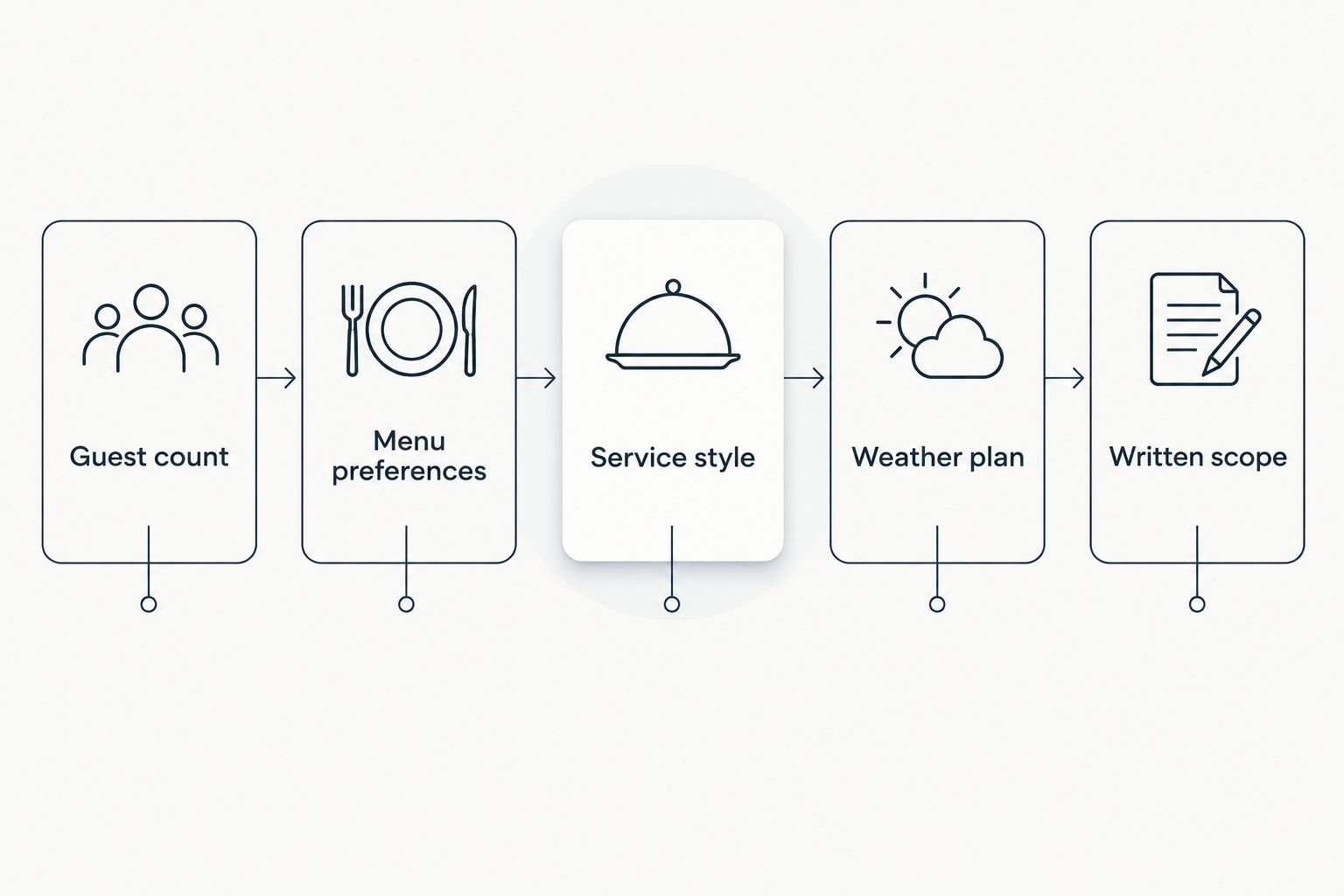
Compare catering formats for a small backyard wedding
The best format is the one your property can support comfortably. Use this comparison to prepare questions, not to assume every caterer offers every option. Staffing, equipment, and responsibilities need individual confirmation.
| Option | Best for | Main benefit | Key limitation |
|---|---|---|---|
| Plated service | Couples prioritizing a seated dinner and coordinated reception moments | Guests receive their meals without visiting a serving area | Requires coordinated service and a workable route to each table |
| Family-style dining | Couples who want shared dishes and table conversation | Keeps the meal centered around the dining table | Serving dishes compete with decorations and place settings for space |
| Buffet service | Couples who want guests to select from an agreed menu | Gives guests a choice at the serving area | Requires circulation space and a clear plan for temperature control |
| Private-chef dinner format | Couples making an intimate dinner the center of the celebration | Connects menu planning closely to the dining experience | Cooking, serving, and clearing responsibilities must be confirmed separately |
For any format, explain the experience you want before asking for dishes. A private dinner arrangement is not automatically a full wedding catering scope. Confirm whether the proposal covers the reception tasks you need, including service beyond food preparation.
Plan your personalized wedding meal
Share your Dallas or Fort Worth location, guest count, and menu priorities to request a tailored quote.
Common mistakes backyard wedding couples make
Treating a small guest list as a complete plan
An intimate wedding still needs someone responsible for serving, clearing, and answering practical questions. Assign those tasks before the day arrives. A smaller celebration deserves fewer distractions for the couple, not more household duties.
Choosing dishes before confirming the property
A menu chosen without kitchen and layout information leaves essential questions unresolved. Share photographs and access details early. Ask the caterer to explain what the proposed meal needs at your home before you commit to the dining arrangement.
Using every table surface for decoration
Family-style dishes, water service, and guests' place settings need room. Plan centerpieces after confirming the dining format and serving pieces. Keep the service route clear too; a visually full backyard is not necessarily a comfortable reception space.
Assuming personal service includes every wedding task
Personalized menus do not establish who supplies rentals, serves drinks, removes waste, or restores the kitchen. Gabbeys' emphasis on attentive service makes those details useful inquiry questions, not automatic inclusions. Ask for named responsibilities in writing rather than relying on a general description.
FAQ
What's the best catering style for a small backyard wedding?
The best style is the one that fits your property and guest experience. Compare plated service for a seated reception, family-style dining for shared dishes, and a buffet when you have suitable circulation space. Confirm which formats your caterer offers.
Can I hire Gabbeys for a backyard wedding in Dallas or Fort Worth?
Gabbeys provides wedding catering and event services in Texas. Share your Dallas or Fort Worth address, proposed date, guest count, and menu preferences to discuss your celebration and confirm the proposed service scope.
How much does small wedding catering cost?
Small wedding catering requires a personalized quote based on the event scope. Menu choices, guest count, staffing, service format, equipment, travel, and property requirements affect the quote. Ask what each proposal includes before comparing totals.
Is a private chef the same as wedding catering?
A private-chef dinner and wedding catering are not interchangeable service scopes. Both can center on a personalized meal, but reception service, equipment, clearing, and other responsibilities need separate confirmation.
What should I send when requesting a backyard wedding quote?
Send your location, proposed date, guest count, menu preferences, dietary requirements, and preferred dining format. Add kitchen photographs, access details, and an indoor weather alternative so the provider can assess the practical requirements.
How do I accommodate food allergies at a small wedding?
Collect each guest's specific allergy information and discuss it directly with the caterer before approving the menu. Ask about preparation, cross-contact controls, and identifying the correct dish during service. Do not treat a menu label as confirmation of allergy safety.
What happens if the weather changes during a backyard reception?
Use the weather alternative agreed before the wedding. That plan should identify where guests eat, how food service moves, and who authorizes the change. Confirm that the alternative supports the proposed menu as well as seating.
One last thing
Make one final walkthrough part of your 2026 wedding plan: follow a dish's route from preparation to the guest's place setting. Check the doors, paths, furniture, and serving space along the way. This simple exercise exposes practical questions that a menu discussion cannot answer.
Then send your preferences and property details to Gabbeys. A qualified inquiry starts with the celebration you want and the responsibilities you want handled. That gives your personalized quote a clear purpose: helping you enjoy your own wedding.