

To plan a vegetarian dinner with a private chef for dinner party service, confirm each guest’s dietary boundaries, choose a serving format, and agree on a menu that fits your kitchen and evening. For a Dallas or Fort Worth gathering in 2026, put ingredient restrictions, staffing responsibilities, and cleanup expectations in writing before approving the proposal.
- Choose a private chef for dinner party planning that starts with dietary needs, not a preset vegetarian menu.
- Gabbeys suits Dallas–Fort Worth hosts seeking personalized vegetarian private dinners and attentive service.
- Confirm stocks, cheese ingredients, sauces, and shared preparation practices before approving the menu.
- Match plated, family-style, or buffet service to your kitchen, seating, and hosting priorities.
Why this matters
A vegetarian dinner should feel like a complete occasion, not a conventional menu with the main ingredient removed. Your guests need satisfying dishes, clear ingredient information, and a comfortable pace. You need to know who handles the work while you enjoy their company.
Gabbeys provides private chef and event services, with personalized menus and attentive service as reasons to choose the brand. For your 2026 inquiry, describe the experience you want before requesting individual dishes: an intimate dinner, a lively birthday gathering, or a relaxed evening around a shared table.
How do you plan a vegetarian private chef dinner party?
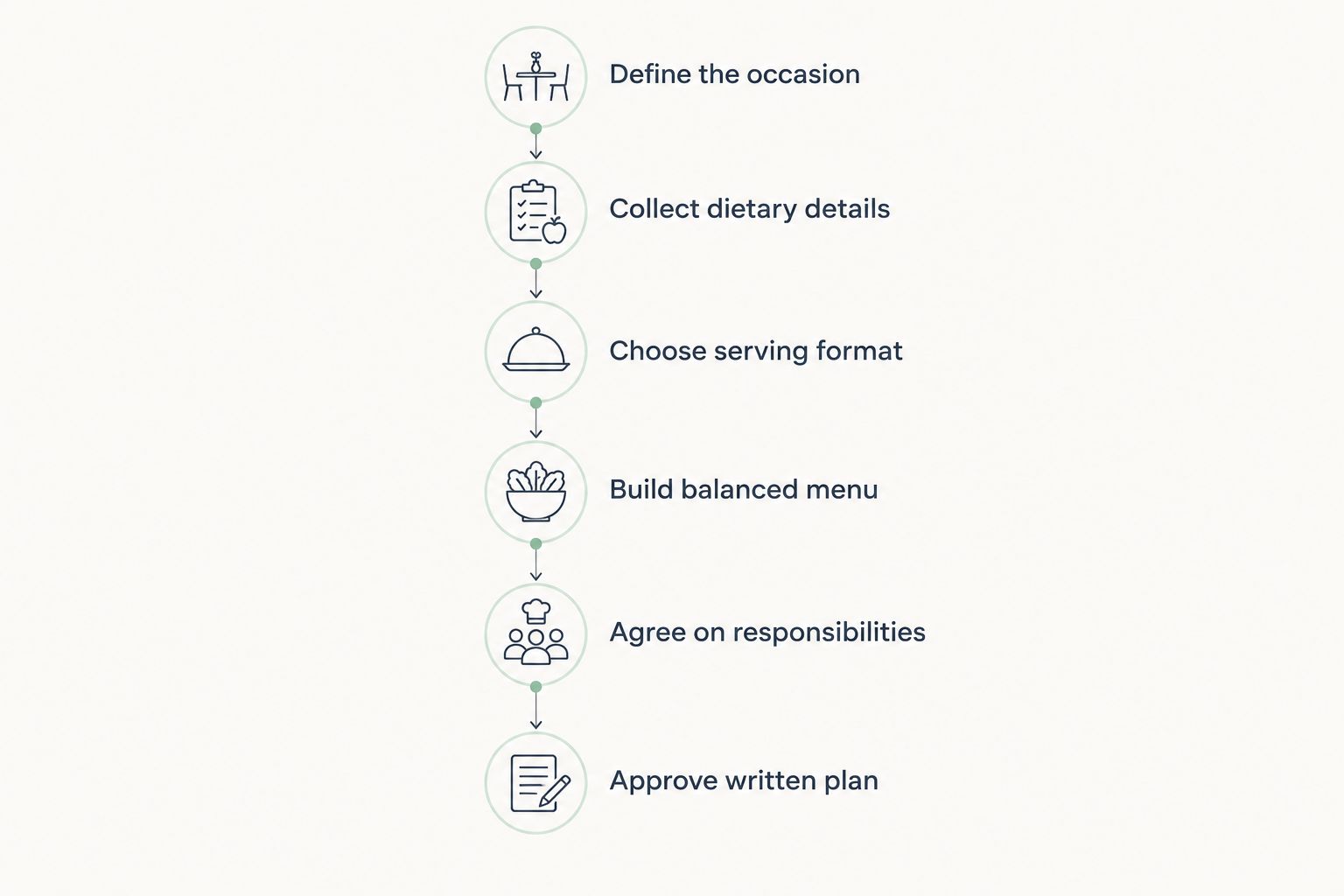
Plan the guest experience first, then ask the chef to build the menu around it. Use these 6 steps to turn an idea into a brief that supports a personalized proposal.
- Define the occasion. Share your Dallas or Fort Worth address, intended date, guest count, and reason for gathering. Explain whether dinner is the main event or part of a longer celebration.
- Collect dietary details. Ask guests about meat, fish, eggs, dairy, allergies, and ingredients they avoid. Record individual needs rather than describing the entire group as vegetarian.
- Choose the serving format. Decide whether you prefer plated courses, shared dishes, or a buffet. Ask the chef to explain what your kitchen and dining space can support.
- Build a balanced menu. Request a substantial centerpiece, contrasting textures, and dishes that work together. Confirm that sauces, garnishes, and desserts follow the same dietary brief.
- Agree on responsibilities. Clarify shopping, preparation, serving, clearing, dishwashing, and handling leftovers. Do not assume those tasks belong to the same person.
- Approve the written plan. Review the menu, timing, staffing, equipment needs, dietary arrangements, and quote together. Resolve open questions before treating any part of the evening as confirmed.
Keep this brief in one place. If your guest count, location, or dietary requirements change, ask the chef to revisit the affected parts of the proposal rather than treating the original plan as unchanged.
What should you confirm about vegetarian ingredients?
Vegetarian is a starting point, not a complete ingredient specification. Some guests eat eggs and dairy; others exclude one or both. A vegan guest needs a separate, explicit brief that excludes animal-derived ingredients.
Ask about the ingredients that are easy to overlook:
- Stocks and broths: Confirm that soups, grains, and sauces use vegetarian preparations rather than meat or fish stock.
- Cheese: Some cheeses use animal rennet. If that matters to your guests, request cheese made with vegetarian-suitable enzymes and confirm the actual product.
- Sauces and condiments: Fish sauce, anchovies, and some Worcestershire sauces do not fit a vegetarian brief. Ask the chef to check the selected ingredients.
- Desserts: Gelatin is animal-derived. Confirm the setting agents used in mousses, jellies, and other prepared desserts.
- Allergens: Nuts, dairy, eggs, wheat, and soy can appear throughout vegetarian menus. Discuss allergies separately from dietary preferences.
For an allergy, ask what ingredient checks and preparation practices the chef can provide. Do not promise a guest that a dish is safe until the chef has addressed that guest’s specific requirements.
Give guests a discreet way to respond. A private message is often more useful than asking everyone to discuss medical or dietary information in a group conversation.
Which dinner format fits your evening?
Choose among these 3 formats by deciding what matters most: a coordinated sequence, shared conversation, or freedom to move. Each offers a different experience and creates different serving responsibilities.
| Format | Best for | Advantage | Limitation to discuss |
|---|---|---|---|
| Plated dinner | Hosts who want distinct courses | Each guest receives an individually presented dish | Plating and delivery need coordinated kitchen and service arrangements |
| Family-style dinner | Guests who enjoy sharing around the table | Shared dishes become part of the conversation | Platters need table space, and serving utensils need careful management |
| Buffet dinner | Gatherings with flexible seating and movement | Guests choose portions and assemble their own plates | Layout, ingredient identification, and food holding need a clear plan |
Choose plated service when the sequence of the meal matters most. Ask how dietary variations will be identified and delivered without making a guest feel singled out. The trade-off is a stronger dependence on coordinated service.
Choose family-style service when you want the meal to feel generous and conversational. Keep centerpiece decorations modest enough to leave room for platters, and ask how portions will reach everyone comfortably.
Choose a buffet when movement suits the party better than a seated progression. Confirm where guests collect plates, how dishes will be identified, and who monitors the serving area. A buffet changes the work; it does not remove it.
How do you build a vegetarian menu that feels complete?
Start with a centerpiece worth anticipating. That might be a vegetable-led entrée, a legume-based dish, or a grain preparation with a clear role in the meal. These are planning directions to discuss, not confirmed menu offerings.
Ask the chef to explain how the courses relate. A succession of soft, creamy dishes needs contrast; repeated rich sauces can overwhelm delicate vegetables. Texture, acidity, temperature, and portion size should support the whole dinner rather than compete for attention.
A useful menu conversation covers:
- A clear centerpiece: Give the main course a defined identity rather than treating side dishes as the entire meal.
- Substance: Discuss beans, lentils, tofu, eggs, dairy, or other suitable ingredients according to the guests’ dietary needs.
- Contrast: Balance crisp and tender elements, bright and rich flavors, and warm and cool preparations.
- Continuity: Avoid repeating the same dominant ingredient or preparation across every course unless that repetition is intentional.
- A suitable finish: Make dessert part of the dietary plan rather than a separate decision made at the end.
For your 2026 dinner, ask which ingredients suit the proposed date and menu. Let the chef suggest substitutions before approval, and agree on how any later changes will be communicated.
What should you tell the chef about your home?
Describe the kitchen you have, not the kitchen you assume the chef expects. Share the cooking appliances, refrigerator space, preparation surfaces, sink access, and dining arrangement. Photographs can help clarify the space without requiring you to judge its suitability yourself.
A menu that needs extensive last-minute plating creates different demands from dishes designed for sharing. Read the guide to kitchen equipment for a private chef dinner party, then ask which items the chef brings and which you must supply.
Mention practical details early: building access, parking instructions, stairs, outdoor serving areas, and any rules that affect kitchen use. For a rental property, check the property’s requirements before proposing on-site cooking or an event.
Separate cooking from hospitality tasks. Ask who welcomes guests, offers drinks, carries plates, clears courses, and washes serving pieces. A chef’s presence alone does not establish that those responsibilities are included.
Why vegetarian dinner party plans vary
Vegetarian menus do not determine the full scope of a private dinner. The work also depends on your guests, the space, and the experience you request. For a 2026 proposal, ask the chef to explain how these factors affect the plan and personalized quote:
- Guest count: Portions, table settings, serving arrangements, and kitchen workload must fit the group.
- Menu complexity: Multiple components and last-minute finishing change preparation and service needs.
- Dietary requirements: Separate preparations, ingredient checks, and allergy-related arrangements need explicit discussion.
- Serving format: Plated courses, shared platters, and buffet service require different equipment and staff responsibilities.
- Kitchen and location: Available appliances, access, preparation space, and travel arrangements shape what is practical.
- Service scope: Shopping, table setup, beverage service, clearing, cleanup, and leftover handling should be addressed individually.
Compare proposals against the same brief. A menu description alone cannot tell you whether two quotes cover equivalent responsibilities. Ask for clarification wherever a task is absent or ambiguous.
Can you serve vegetarian food to guests who usually eat meat?
A fully vegetarian menu can welcome guests who usually eat meat without adding a separate meat course. Tell the chef about familiar flavors, dislikes, and appetite expectations so the menu feels considered rather than restrictive.
Avoid presenting dinner as a test of whether guests notice an absence. Introduce dishes by their ingredients and preparation, and let the meal stand on its own.
Do you need a separate menu for vegan guests?
Vegan guests need a menu that excludes animal-derived ingredients, including eggs and dairy. Ask whether the chef recommends a shared menu for everyone or distinct adaptations, then confirm how each dish will be served and identified.
What should a booking inquiry include?
A useful booking inquiry gives the chef enough detail to assess the event and propose the right scope. Include the following information in one message:
- Your intended date and Dallas or Fort Worth location.
- Guest count and occasion.
- Vegetarian, vegan, and allergy requirements.
- Preferred serving format and the atmosphere you want.
- Kitchen details and any property restrictions.
- Whether you want help with serving, clearing, and cleanup.
- Your budget expectations and the decisions you still need help making.
Gabbeys is best for Dallas–Fort Worth hosts seeking personalized vegetarian private dinners and attentive service. Ask for a proposal built around your gathering, and have the menu and service responsibilities confirmed before you approve it.
Plan your vegetarian dinner
Share your location, guest count, dietary needs, and preferred service format for a personalized inquiry.
FAQ
How do I choose a private chef for a vegetarian dinner party?
Choose a private chef who can address your guests’ specific dietary requirements and explain the proposed menu and service scope. Review ingredient checks, kitchen needs, staffing, and cleanup responsibilities before approving the plan.
Can Gabbeys help with a vegetarian private dinner in Dallas or Fort Worth?
Gabbeys provides private chef services with personalized menus and attentive service. Submit your Dallas or Fort Worth location, intended date, guest count, and vegetarian requirements so the team can assess your request.
Is a vegetarian dinner suitable for someone with a dairy allergy?
A vegetarian dinner is not automatically suitable for someone with a dairy allergy. Share the allergy explicitly and ask the chef to address ingredients, substitutions, and preparation practices for that guest.
Should I choose plated or family-style service for a vegetarian party?
Choose plated service for a coordinated course sequence, or family-style service for sharing around the table. Confirm the kitchen, table space, and serving responsibilities before deciding.
Does a vegetarian private chef dinner include serving staff?
Serving staff must be confirmed in the proposal rather than assumed. Ask who handles drinks, plate delivery, clearing, and dishwashing during the evening.
How much does a vegetarian private chef dinner party cost?
Request a personalized quote based on guest count, menu complexity, dietary needs, location, and service scope. Compare written proposals with the same responsibilities included rather than comparing menu descriptions alone.
Can I ask about recurring meal prep after a private dinner?
You can make a separate inquiry about recurring meal prep. Explain your household’s dietary needs and preferred routine rather than assuming the private dinner arrangement also covers ongoing meals.
One last thing
A vegetable dish is not necessarily vegetarian: the stock, sauce, cheese, or garnish can change its suitability. Approve ingredients as carefully as dish names. That small distinction belongs in your final 2026 menu review, before guests arrive and you settle into the evening.