

Hire a personal chef for recurring visits when you want planned meals without a chef working in your home every day; choose a full-time chef when your household needs dedicated, ongoing cooking and daily coordination. The deciding factor is the work you need covered—not the job title—and either arrangement needs a written scope covering menus, scheduling, groceries, kitchen responsibilities, and changes.
- Hire a personal chef for recurring meal prep when scheduled visits meet your household’s needs.
- A full-time chef fits households that need dedicated daily cooking and coordination.
- Gabbeys meal prep is best for clients seeking personalized menus and attentive service.
- Compare written responsibilities, not titles: groceries, cleanup, scheduling, and entertaining need explicit agreement.
Why this matters
For Dallas and Fort Worth households, the choice starts with an ordinary week. Do you want prepared meals ready when family members come home, or someone managing cooking as plans change throughout the day? Those are different assignments.
Choose the smallest service scope that fully meets your needs. Recurring visits do not promise daily presence, while full-time hiring introduces staffing responsibilities that a scheduled service arrangement does not necessarily involve. For personalized meal prep, private dinners, and celebrations, explore Gabbeys with a clear description of the help you want.
Should you hire a personal chef for recurring visits or full-time?
Choose recurring visits when the main deliverable is meals prepared on an agreed schedule. Choose full-time support when the role requires dedicated working hours, ongoing household coordination, and cooking throughout the week. For your 2026 search, compare the proposed duties before comparing the labels.
| Arrangement | Best for | Main advantage | Main limitation | Confirm before committing |
|---|---|---|---|---|
| Recurring chef visits | Households wanting scheduled meal prep | Defined visits built around planned meals | No assumed daily presence or immediate changes | Visit schedule, portions, storage, groceries, and cleanup |
| Full-time chef | Households needing dedicated daily cooking | A role organized around ongoing household needs | Requires a defined work schedule and staffing arrangements | Duties, employment structure, time off, and coverage |
| Private dinner or event service | Hosts planning a specific gathering | Menu and service organized around an occasion | Does not establish recurring household support | Guest count, service style, timing, and staffing |
These arrangements solve different problems. A household can need recurring meal prep and a separately planned anniversary dinner without needing a full-time chef. Equally, a household that expects breakfast preparation, changing lunch plans, and hosted dinners should describe that complete assignment rather than request meal prep alone.
Start with the work, not the title
The terms personal chef and private chef do not establish a service agreement. Ask what happens during the visit, what remains ready afterward, and what requires a separate booking. A polished proposal should make those boundaries easy to understand.
Write your desired outcome in plain language: prepared weekday dinners, freshly cooked meals at agreed times, or a hosted celebration. That sentence becomes the starting point for a useful inquiry.
Recurring visits: best for planned household meals
Recurring visits suit you when meals can be planned ahead and prepared during scheduled kitchen time. You agree on the menu, portions, visit pattern, and handling instructions instead of assuming that the chef will return whenever plans change. The benefit is a defined routine.
Choose recurring meal prep when your main goal is dependable meals between visits. Explain who will eat them, which meals need support, and whether household members eat together or separately. A dinner intended for everyone at the table needs different portioning instructions from individual lunches.
Personalization should include more than favorite dishes. Describe disliked ingredients, dietary restrictions, texture preferences, and how much repetition your household enjoys. Keep medical dietary instructions specific, and ask how the proposed service will address them rather than assuming every request fits.
The trade-off is that prepared meals require a plan after the chef leaves. Confirm who puts food away, how containers are identified, and how you should reheat each dish. If you want everything cooked immediately before eating, state that preference before accepting a recurring meal-prep proposal.
What to settle before the first visit
- Meal coverage: Identify the meals you want prepared and the people eating them.
- Menu approval: Decide when you review dishes and how you request changes.
- Shopping responsibility: Establish who buys ingredients and handles substitutions.
- Kitchen access: Explain entry arrangements, equipment, refrigerator space, and household activity.
- After-visit instructions: Request clear storage, reheating, and cleanup expectations.
For a recurring arrangement in 2026, make schedule changes part of the initial conversation. Travel, school activities, and guests should trigger an agreed adjustment process—not an assumption that the original scope covers everything.
Full-time chef: best for dedicated daily cooking
A full-time chef role fits a household that needs ongoing cooking within a defined work schedule. The assignment can include more frequent coordination and meals prepared around household routines, but only when those duties are agreed. Full-time does not mean unrestricted access to someone’s time.
Choose a full-time role when daily presence is part of the requirement, not simply a preference for convenient meals. Describe expected working days, meal times, household communication, and any entertaining responsibilities. Distinguish regular duties from occasional requests.
The advantage is a role built around sustained household involvement. The limitation is the management that accompanies it: recruitment, written duties, time off, coverage, and the legal structure of the engagement. Confirm the appropriate employment and payroll arrangements with qualified advisers before hiring.
Keep the chef’s role separate from unrelated household tasks. Grocery planning, food preparation, and kitchen cleanup are not the same assignment as general housekeeping or managing every aspect of an event. Each added responsibility needs discussion.
Questions that clarify a full-time role
Ask when the chef is expected to be present and what happens outside those hours. Establish who approves menus, how guests affect the workload, and how absences are handled. If your household travels, discuss expectations before treating travel as part of the role.
For a 2026 hiring decision, judge the role against a representative household week. A description built only around your busiest celebration will not accurately describe everyday needs.
Why personal chef arrangements vary
The right arrangement depends on the work required, not simply how much you enjoy dining at home. These factors also belong in a personalized quote request:
- Meal frequency: Scheduled preparation and daily cooking require different patterns of attendance.
- Household preferences: Different portions, dietary needs, and meal times change the preparation brief.
- Shopping responsibility: Ingredient purchasing, substitutions, and grocery coordination need an assigned owner.
- Kitchen setup: Equipment, preparation space, storage, and access affect how the work is organized.
- Service expectations: Cooking alone differs from serving guests, coordinating courses, and managing the dining area.
- Schedule changes: Travel, additional guests, and altered meal times need a defined approval process.
Avoid comparing proposals until these responsibilities match. A shorter scope is not equivalent to a broader assignment, even when both are described as personal chef services. Ask for a revised proposal when important duties remain unclear.
How do you choose the right arrangement?
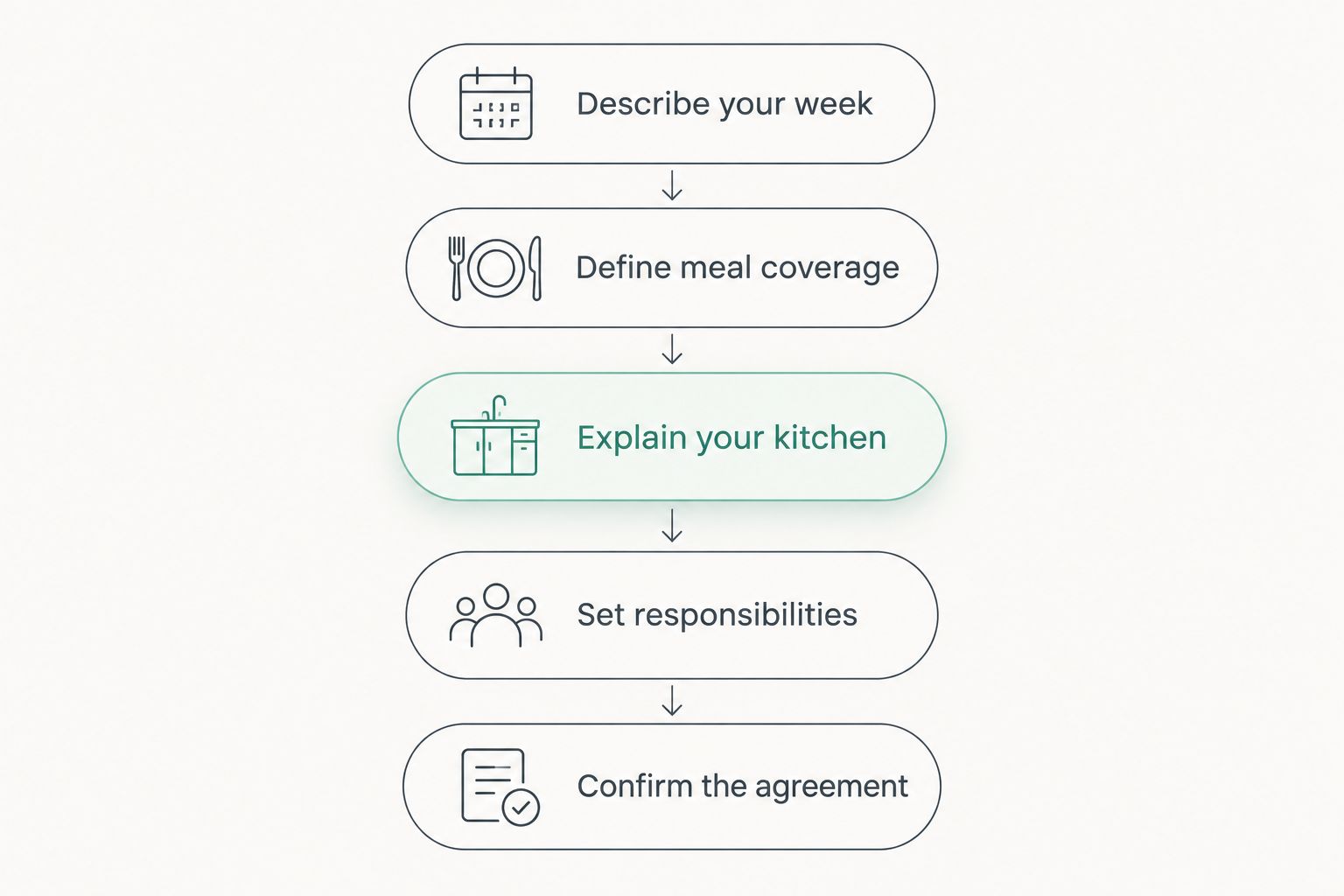
Use your actual household routine to build the brief. The following sequence keeps the conversation focused on fit rather than an appealing but undefined service description.
- Describe your week. List the meals that create work for you and identify when people usually eat.
- Define meal coverage. Separate prepared meals from meals you want cooked and served immediately.
- Explain your kitchen. Share available equipment, storage space, access arrangements, and practical restrictions.
- Set responsibilities. Assign menu approval, shopping, containers, cleanup, and communication.
- Confirm the agreement. Review scheduling, changes, cancellations, and the boundaries of the service before proceeding.
A useful brief should also distinguish essential requirements from preferences. An allergy instruction is not interchangeable with a request for more menu variety. Clear priorities help both parties assess whether the proposed arrangement fits.
Before committing, review what a personal chef service agreement should include. Written boundaries protect the experience you are trying to create: comfortable meals, clear expectations, and less coordination at home.
Can recurring meal prep also cover private dinners and weddings?
Recurring meal prep does not establish dinner-party or wedding service unless the agreement expressly includes it. Treat an occasion as a separate planning conversation, even when you want the same provider involved. Guest service introduces responsibilities beyond preparing household meals.
For a private dinner in Dallas or Fort Worth, explain the occasion, guest count, desired atmosphere, and serving expectations. Ask who handles plating, table service, and cleanup rather than assuming those tasks follow automatically from the cooking booking.
For a wedding, share the venue, guest count, meal format, and timing. Gabbeys provides private chef, catering, wedding, and meal prep services, so your inquiry should identify the particular service you need. Personalized menus and attentive service remain the priorities; the scope should reflect the occasion.
How should you handle meals between chef visits?
Prepared meals need clear storage and reheating instructions, regardless of who cooks them. USDA household food-safety guidance calls for refrigeration at 40°F or below, refrigerating perishable food within 2 hours, and reheating leftovers to 165°F. The refrigeration window is shorter in hot conditions.
Use those safety basics alongside dish-specific instructions. Ask which meals should be eaten first, which can be frozen, and how to reheat them without guessing. Have a food thermometer available, and clarify who labels containers before the visit ends.
For your 2026 meal-prep routine, make storage space part of the planning brief. Prepared food is only convenient when you have room to store it safely and instructions your household can follow.
What should you include in a booking inquiry?
A qualified inquiry gives the provider enough detail to discuss an appropriate scope. Include your Dallas or Fort Worth location, the service you want, your preferred schedule or event date, household size or guest count, dietary requirements, and relevant kitchen details.
Gabbeys meal prep is best for clients seeking personalized menus and attentive service. Request a personalized quote that reflects your household’s needs, and distinguish recurring preparation from private dinners, parties, or wedding catering.
Plan Your Personal Chef Inquiry
Share your location, meal needs, dietary preferences, and desired schedule for a personalized quote.
FAQ
Should I hire a personal chef for recurring visits or full-time?
Choose recurring visits for scheduled meal preparation and a full-time role when you need dedicated daily cooking. Define the meals, working schedule, and responsibilities before deciding.
Do I need a full-time chef for family meal prep?
You do not need a full-time chef when scheduled preparation meets your family’s meal needs. Ask how the proposed visits cover portions, dietary preferences, storage, and reheating.
Does a personal chef handle grocery shopping?
Grocery shopping belongs in the written scope rather than being assumed. Confirm who purchases ingredients, approves substitutions, and manages grocery expenses.
Can a recurring chef visit include a dinner party?
A dinner party requires explicit agreement on the event scope. Confirm guest count, menu, timing, serving responsibilities, and cleanup separately from routine meal prep.
How do I compare personal chef quotes?
Compare quotes against the same responsibilities and meal coverage. Check shopping, preparation, service, cleanup, schedule changes, and any separately quoted work.
What should I tell a personal chef about dietary needs?
Describe allergies, dietary restrictions, preferences, and any clinician-provided instructions before menu planning. Ask how the provider will handle the requirements rather than assuming suitability.
How do I inquire about a personal chef in Dallas or Fort Worth?
Provide your location, desired service, schedule, household size or guest count, and dietary requirements. Include kitchen details and request a personalized quote with clear responsibilities.
One last thing
Your busiest day is not always the best hiring brief. Before choosing a chef arrangement in 2026, describe an ordinary week and then list special occasions separately. That distinction helps you request recurring support without accidentally building an everyday role around occasional entertaining.