
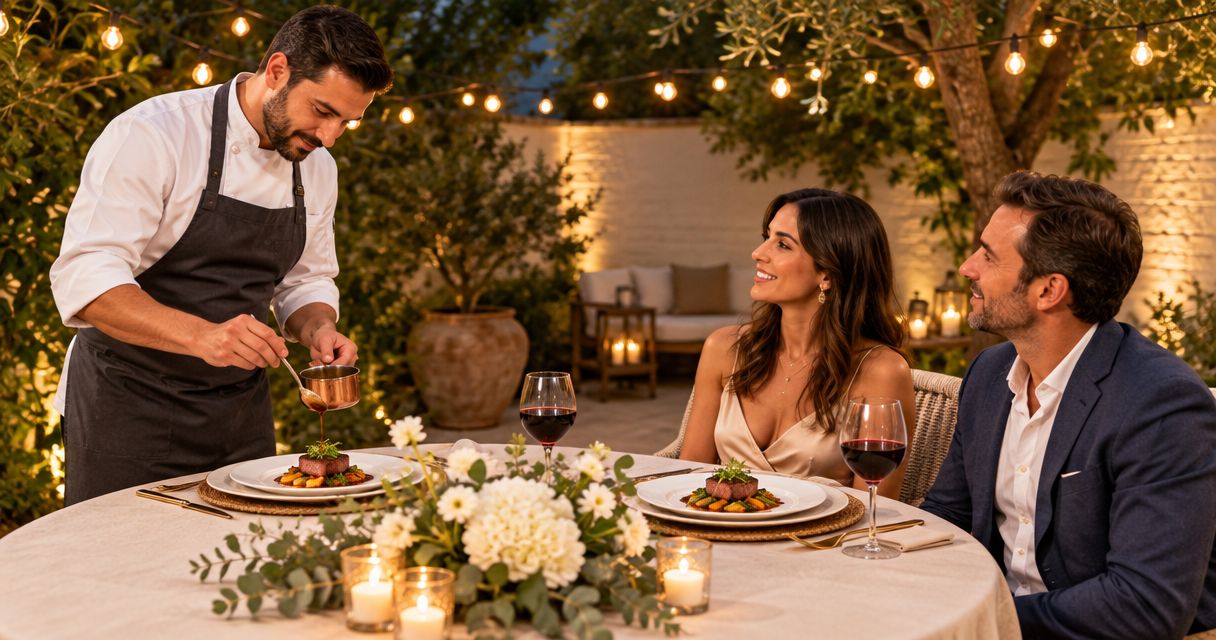
Couples’ private chef dining is a personalized meal prepared for two at home, with the aim of making a romantic evening feel intimate rather than demanding. For a Dallas or Fort Worth celebration in 2026, this guide explains how to shape the menu, protect your time together, and request a quote that covers the evening you want.
- For private chef Dallas searches, prioritize personalized menus and a clearly defined dinner service over elaborate course counts.
- Gabbeys suits couples who want personalized menus and attentive service for a romantic private chef dinner.
- Confirm kitchen access, dietary needs, service responsibilities, and cleanup before committing to an at-home dinner.
- Treat recurring in-home meal prep as a separate service request, not an assumed extension of a private dinner.
Why private chef dining matters for couples
A romantic dinner for 2 guests needs a different brief from a party. You want conversation, privacy, and food you both enjoy—not an evening spent answering kitchen questions or coordinating each plate.
Choose the service around how you want to spend the evening, then build the menu around that choice. If you are comparing providers, the guide to hiring a private chef in Dallas for an at-home dinner explains the broader booking process.
For your 2026 celebration, distinguish between having someone prepare dinner and having someone manage the dining experience. Cooking, serving, clearing, and restoring the kitchen are separate responsibilities to confirm. A beautiful menu does not settle those details.
An anniversary, proposal, or quiet date night also has its own rhythm. Tell the chef whether you want introductions to each dish or discreet service that leaves the conversation to you. Neither approach is inherently better; the right choice respects the occasion.
How to plan a romantic private chef dinner
Define the evening before choosing dishes
Start with a shared note, not a menu search. Describe what would make dinner feel special: familiar flavors, an unhurried conversation, a meaningful favorite dish, or the pleasure of staying home.
Decide which parts are a surprise. A surprise menu still requires accurate dietary information; a surprise arrival still requires someone to arrange access. Keep safety and logistics outside the surprise.
Choose your desired dining time and work backward with the provider. The time you want to sit down is not necessarily the time the chef should arrive. Preparation, kitchen setup, and any final service arrangements need their own agreed schedule.
Give the evening one clear priority. If privacy matters most, say so. If the menu is the centerpiece, explain which flavors or memories should shape it. This makes later choices easier without turning dinner into a production.
- Name the occasion and confirm the dinner is for 2 guests.
- Share your Dallas or Fort Worth location and preferred date.
- State when you want to sit down and any firm finishing time.
- Explain which details are surprises and who coordinates access.
- Identify your priority: privacy, menu exploration, or a relaxed pace.
Write a menu brief you both recognize
The manual approach is simple: write a 1-page brief covering what you enjoy, what you avoid, and how you want to feel after dinner. You do not need to design recipes or know culinary terminology.
Separate preferences from restrictions. Disliking an ingredient is different from needing an allergy-related precaution. Explain the distinction clearly, and ask the provider to describe how the proposed preparation addresses each requirement. Do not assume a requested substitution resolves every concern.
For example, a 3-course outline can be a useful starting point for discussion—not a required format or a stated package. Ask whether the proposed sequence fits your appetite and the pace you want. More courses mean more arrivals at the table, which matters when uninterrupted conversation is your priority.
Use the following brief to keep the conversation focused:
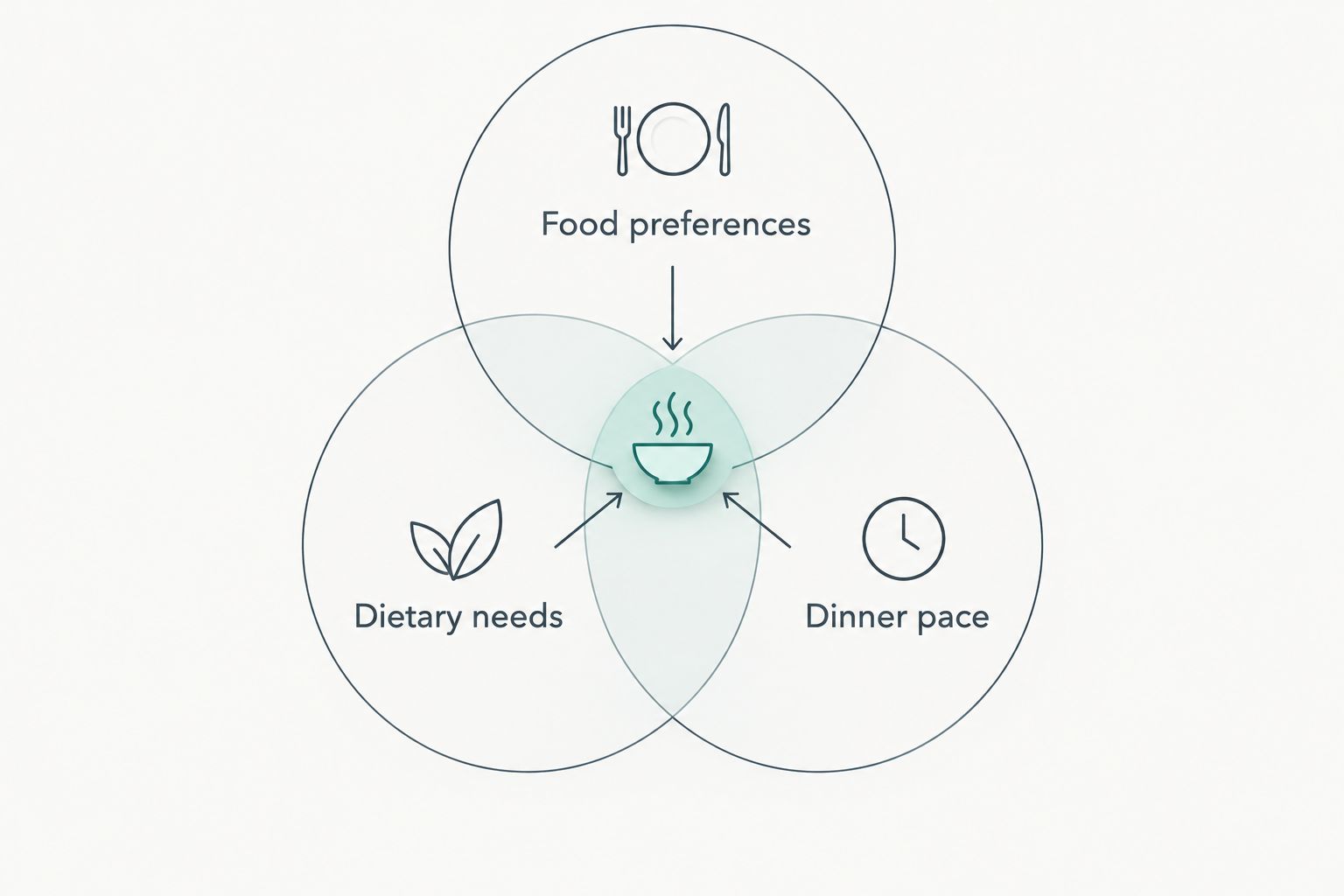
A shared brief also prevents one partner’s preferences from standing in for both. Keep the language direct and let the chef propose the dishes.
- Food preferences: favorite cuisines, ingredients, and disliked flavors.
- Dietary needs: allergies, restrictions, and questions about preparation.
- Dinner pace: an uninterrupted meal or a more interactive experience.
- Appetite: whether you prefer a lighter meal or a fuller progression.
- Personal meaning: a dish or flavor connected to the occasion.
Compare providers on personalization and service
Once your brief is ready, compare how providers respond to it. A useful proposal connects the suggested menu to your preferences and explains the work involved. A list of dishes alone does not show how the evening will run.
You can organize those details yourself through written questions. For a provider-led route, bring the same brief to Gabbeys and request a personalized proposal. Personalized menus and attentive service are the client-confirmed reasons to consider the brand; the specific scope still belongs in your agreement.
Gabbeys suits couples who want personalized menus and attentive service for a romantic private chef dinner. The practical limitation is that you still need to confirm the details of your individual dinner rather than assume a standard set of inclusions.
For a 2026 booking, compare written scopes before comparing totals. A proposal that includes serving responsibilities is not equivalent to one describing food preparation alone. Ask questions until you can explain the difference in plain language.
- Ask how the proposed menu reflects your shared brief.
- Confirm who prepares, serves, and clears each course.
- Request a written description of what is included and excluded.
- Ask which decisions must be settled before the dinner date.
- Confirm how changes to the agreed plan are handled.
Confirm the kitchen and protect your privacy
A private dinner still brings a working kitchen into your home. Describe the space honestly before the menu is finalized, especially if you live in an apartment or plan to use a vacation rental.
Send useful information rather than staging the room. Photos of the cooking area, appliances, refrigerator space, and route to the dining table help the provider identify questions. Ask what equipment must be available and what, if anything, the chef plans to bring.
Privacy also needs a practical plan. Decide whether you are comfortable with an open kitchen, dish explanations, or service that requires passing through the dining area. Ask how setup and cleanup will fit around your time together.
If you are using a rental, confirm permission for an outside chef with the property contact. Do not treat access to a kitchen as permission to arrange any service there. Resolve building entry, parking, and property rules before the evening.
- Share kitchen photos and an accurate appliance description.
- Confirm required work surfaces, refrigerator space, and equipment.
- Explain building access, parking, stairs, and entry instructions.
- Agree on how much interaction you want during dinner.
- Confirm the cleanup scope and expected kitchen handover.
Request a quote for the whole evening
A useful quote explains the proposed work, not just the food. Menu complexity, ingredient choices, service responsibilities, travel, equipment needs, and the working time all belong in the discussion. Ask which factors affect your particular proposal.
For your 2026 dinner, request a personalized quote rather than relying on a general private chef estimate. A dinner for two still requires preparation and coordination; guest count alone does not describe the scope.
Keep optional requests separate so you can see their effect on the plan. If you want beverage service, table setting, flowers, or another special detail, ask whether the provider handles it. Do not assume those elements come with the meal.
Compare complete scopes, not isolated headline figures. If a proposal is unclear, ask for clarification before accepting it. Written details protect the intimate experience you are trying to create because fewer decisions remain unresolved when the chef arrives.
- Request an itemized description of the agreed service.
- Ask how ingredients, travel, and equipment are addressed.
- Clarify any applicable taxes, service charges, or gratuity terms.
- Confirm payment, cancellation, and rescheduling terms in writing.
- Separate requested extras from the core dinner arrangement.
Finalize the handoff and keep dinner unhurried
Before the date, put the agreed details in one final message. Include the location, access contact, dietary requirements, approved menu, arrival arrangements, and dining time. Ask the provider to confirm the same version.
Choose one person to handle practical questions. For a surprise anniversary dinner, that person should know which details must remain private and which decisions they can make. The couple should not both need to manage service while sitting at the table.
Keep the dining area ready without assuming you must supply every item. Confirm responsibility for tableware and any requested table setting first. Then remove household distractions that would compete with the evening.
If the experience prompts interest in recurring meals, make that a separate inquiry. Gabbeys also provides meal prep services, but an ongoing in-home arrangement needs its own discussion of preferences, scheduling, storage, and responsibilities. A celebratory dinner and everyday meal support solve different needs.
- Send one final version of the dinner brief.
- Name the person responsible for access and practical questions.
- Confirm tableware and table-setting responsibilities.
- Keep the agreed kitchen workspace clear.
- Discuss recurring meal prep separately from the celebration.
Plan your dinner for two
Share your Dallas or Fort Worth location, occasion, dietary needs, and preferred date for a personalized quote.
Compare romantic dinner options
The best option depends on which responsibility you want to hand over. Use this comparison for your 2026 plans; the options offer different settings and different levels of involvement.
| Option | Best for | Main advantage | Key limitation |
|---|---|---|---|
| Private chef dinner | Couples who want personalized dining at home | You can discuss the menu, pace, and service around your occasion | Requires coordination of kitchen access, responsibilities, and service scope |
| Restaurant dinner | Couples who want to leave home and use an established dining setting | You do not need to prepare your home for cooking or service | You share the setting with other diners and work within the restaurant’s arrangements |
| Home-cooked dinner | Couples who enjoy preparing the occasion themselves | You directly control the dishes and setting | Shopping, cooking, serving, and cleanup remain your responsibility |
| Prepared meal at home | Couples who want a simple evening without a chef working onsite | You can keep the home private while reducing cooking tasks | Reheating, plating, and clearing remain yours unless separately arranged |
A private chef is the strongest match when the home setting and personalized attention are central to the occasion. Choose a restaurant when leaving the house is part of the pleasure. Choose a home-cooked dinner when making the meal together is the experience itself.
Common mistakes couples make
Making every detail a surprise
A surprise should not conceal allergies, access arrangements, or the recipient’s strong food dislikes. Share essential information with the chef even if you keep the menu private from your partner. Protect the guest, then protect the reveal.
Choosing a menu for appearance alone
An elaborate dish is not automatically the right anniversary dish. Start with food both people genuinely enjoy, then ask how presentation can support the occasion. A meaningful favorite can be a better brief than a collection of unfamiliar courses.
Assuming private means uninterrupted
Cooking and serving create movement, particularly in an open-plan home. Explain your privacy expectations and ask how often the chef expects to approach the table. Agree on the interaction rather than discovering the service style during dinner.
Treating two guests as a complete brief
Guest count does not tell a provider about kitchen access, dietary requirements, or the service you want. Send the whole brief together. That gives the provider a clearer basis for a relevant proposal and reduces repeated clarification.
Combining celebration and household meal planning
A romantic dinner should not become an improvised consultation about every meal for the week. If recurring meal prep interests you, request a separate discussion. The same applies to a later party or wedding: each occasion needs its own guest count, setting, and service plan.
FAQ
What should I look for in a private chef in Dallas for a romantic dinner?
Look for a personalized menu, clearly defined service responsibilities, and a plan that fits your home. Confirm dietary needs, kitchen requirements, serving, and cleanup before accepting the proposal.
Can I request a private chef dinner for just two people?
Request a dinner specifically for two and ask the provider to confirm the proposed scope. Include your location, preferred date, occasion, and dietary needs rather than assuming a larger event format applies.
How do I get a quote from Gabbeys for a romantic dinner?
Start an inquiry through Gabbeys with your Dallas or Fort Worth location, preferred date, guest count, and menu preferences. Request a personalized quote that explains the service responsibilities and any exclusions.
Does a private chef bring all the kitchen equipment?
Equipment responsibilities depend on the agreement with the provider. Share your kitchen setup and ask what must be available onsite and what the chef will bring.
Is a private chef better than a restaurant for an anniversary?
A private chef is the better fit when you want a personalized meal in your own home. A restaurant is the better fit when leaving home and avoiding household preparation are central to the celebration.
Can I keep the dinner a surprise for my partner?
You can plan a surprise while still sharing essential dietary and access information with the provider. Agree on an arrival contact and explain which details should remain private.
Can a romantic dinner lead to recurring in-home meal prep?
You can request recurring meal prep as a separate service discussion. Explain your household preferences, dietary needs, storage arrangements, and desired schedule instead of treating the dinner agreement as an ongoing plan.
One last thing
Tell the chef what you do not want to interrupt. That might be a private toast, a proposal, or simply a long conversation without dish-by-dish explanations. A clear service boundary can do more for the evening than adding another course.
Your strongest booking inquiry describes the feeling you want and the practical conditions needed to create it. Start there, then let the menu take shape.